
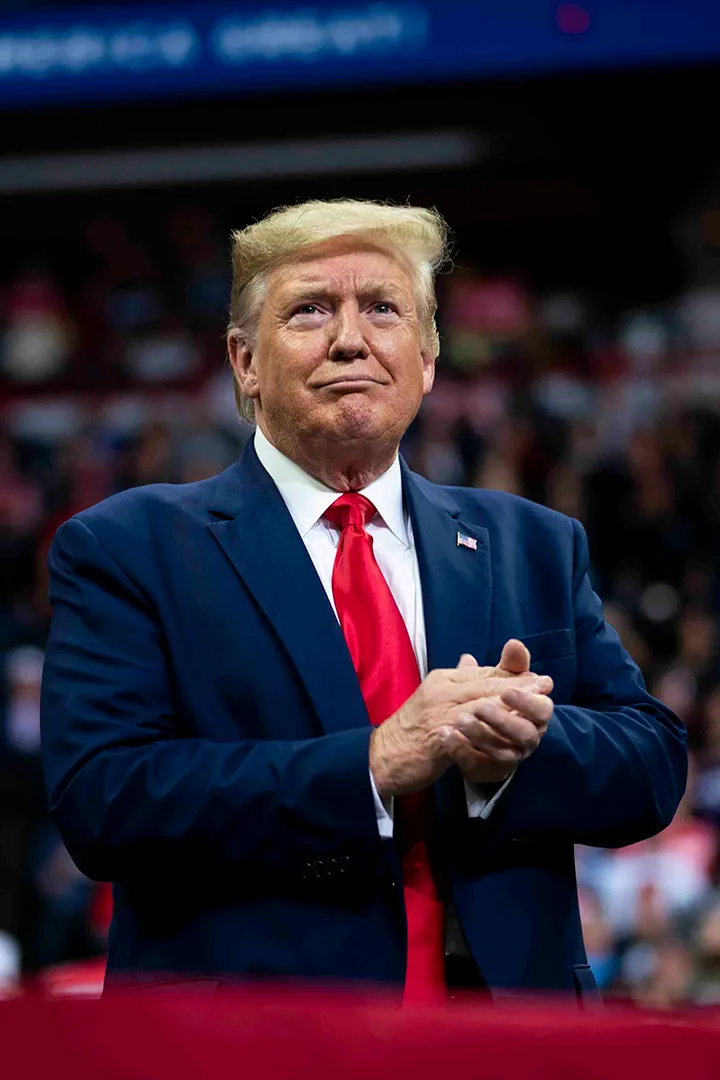
A growing number of Americans appear to be losing confidence in President Donald Trump, with recent polling figures pointing to deep concerns about his leadership, his personal business interests, and whether his administration is putting ordinary citizens first. As the November 2026 midterm elections approach, the political consequences could extend far beyond the White House.
What happens when a president who promised to put America first begins facing growing public skepticism about whose interests he is really serving?
That question is becoming increasingly important in the American political debate as several polling figures cited in recent reports suggest that President Donald Trump is struggling to maintain broad public approval during his second term.
For a president who returned to the White House promising economic strength, national renewal, and a government that would deliver results for ordinary Americans, the latest reported numbers present a serious political challenge.
According to the polling figures provided, Trump’s approval rating has fallen to levels that could make the final stretch before the 2026 midterm elections particularly difficult for Republicans.
But the numbers tell only part of the story.
Beneath the approval ratings lies a deeper question about public trust. Americans are not simply expressing dissatisfaction with a president’s policies. A substantial share of respondents in the surveys cited are also questioning whether Trump is placing his personal financial interests ahead of his responsibilities to the country.
That distinction matters.
Voters can disagree with a president’s decisions while still believing that he is acting in good faith. When doubts extend to ethics, financial interests, and the purpose of public service itself, the political damage can become much harder to reverse.
And with control of Congress at stake in November, these concerns could become a defining issue in the national conversation.
Trump’s Approval Rating Raises New Questions About His Political Standing
The first warning sign comes from the overall approval numbers.
According to the figures provided, The New York Times polling average placed Trump’s national approval rating at approximately 37% on October 14, 2026.
If accurate, that figure would indicate that fewer than four in ten Americans approve of the job he is doing as president.
For any administration, a number at that level presents a difficult political environment. Presidents generally need a meaningful level of public confidence to persuade voters that their policies are working and that their leadership deserves continued support.
When approval remains weak over an extended period, the challenge becomes more complicated.
The administration must persuade skeptical voters that its decisions are producing tangible benefits, while also convincing supporters that the president’s broader direction remains worth defending.
That is a difficult balance to maintain when economic concerns, ethical questions, and partisan disagreements dominate the public conversation.
The polling average cited in the supplied material reportedly remained low and relatively steady for months. If that pattern accurately reflects the broader polling environment, it suggests that Trump’s difficulties may not be explained by a single controversial announcement or a temporary burst of negative headlines.
Instead, the numbers may reflect a more persistent problem with public confidence.
A brief decline in approval can sometimes disappear as the news cycle changes. A sustained period of low approval, however, can indicate that voters have formed more lasting judgments about an administration.

For Republicans preparing for the midterm elections, that distinction is especially important.
Candidates running in competitive districts must answer for their own records, but they also face questions about the national leadership of their party. When a president becomes unpopular, congressional candidates can find themselves defending decisions they did not personally make.
That creates a challenge across the political landscape.
Republican candidates may attempt to emphasize local economic concerns, border security, public safety, or other issues important to their constituents. Yet if voters see the president as a central source of national frustration, separating their campaigns from his political standing may become difficult.
Democrats, meanwhile, may argue that the approval figures demonstrate a broader rejection of the administration’s direction.
Neither party can assume that a national polling number automatically determines the outcome of an election. Congressional races depend on district boundaries, candidate quality, turnout, fundraising, local issues, and the distribution of undecided voters.
Still, a president struggling to win majority approval can create a challenging environment for members of his own party.
And the reported numbers suggest that this is precisely the situation Republicans may need to confront.
Another Poll Shows Deep Dissatisfaction With Trump’s Leadership

The figures attributed to The Economist and YouGov provide another perspective on the president’s standing.
According to the supplied information, a tracking poll updated on October 6, 2026, measured Trump’s approval at 35% and his disapproval at 61%.
That produces a net approval rating of minus 26 percentage points.
In simple terms, the share of respondents who disapprove of Trump’s performance exceeds the share who approve by a substantial margin.
The difference is significant because approval and disapproval measure more than whether voters feel enthusiastic about a president. They also help reveal the size of the group that may be motivated to support an alternative political direction.
A president with weak approval can still maintain a loyal political base. However, strong opposition may make it harder to expand that base or persuade less committed voters that the administration deserves another period of political support.
The reported poll also points to concerns about support among important voting groups, including Latino voters and older Americans.
These groups are not politically uniform. Their preferences vary according to income, geography, education, ideology, personal experience, and the issues they consider most important.
Nevertheless, changes in support among these voters can matter considerably in closely contested elections.
Consider the broader electoral picture.
A relatively small change in voter preferences can influence the result in a competitive congressional district. If dissatisfaction grows among voters who previously supported a Republican candidate, the party may have to spend more resources defending seats that once appeared relatively secure.
At the same time, Democrats would need to persuade those voters that their own candidates offer credible alternatives.
Disapproval of a president does not automatically translate into support for the opposing party. Some dissatisfied voters may stay home, split their tickets, or continue supporting candidates whose local records they trust.
That is why the underlying reasons for declining approval deserve attention.
Are voters primarily concerned about the cost of living? Do they disagree with the administration’s policies? Are they frustrated by political conflict? Or are questions about ethics and personal financial interests changing how they view the presidency?
The answer may be a combination of several factors.
The figures supplied suggest that ethical concerns are an important part of the debate, but approval ratings alone cannot establish exactly how much each issue contributes to a president’s declining popularity.
What they can show, when supported by sound polling methods, is whether the overall political environment is becoming more favorable or less favorable for an administration.
And the reported numbers point toward a difficult environment for Trump.
Reuters/Ipsos Figures Add to the Pressure
The supplied material also attributes a 32% approval rating to recent Reuters/Ipsos polling, describing it as a career low for Trump.
It compares that figure with an approval rating of 47% at the beginning of his second term in January 2025.
If the figures are accurate and methodologically comparable, the difference would represent a decline of 15 percentage points.
That would be a substantial change in a president’s public standing.
The political significance of such a decline is not simply that fewer people approve of the president. It is that an administration which began its term with a considerably stronger level of support may have struggled to maintain that confidence over time.
Presidents often experience an initial period of political adjustment after taking office. Public reactions can change as campaign promises become actual policies, as economic conditions evolve, and as voters evaluate the consequences of government decisions.
The transition from campaigning to governing can expose tensions that were less visible during an election campaign.
Promises that sounded straightforward during a campaign may become more complicated when they encounter economic realities, congressional negotiations, legal challenges, and competing public demands.
Voters also judge presidents against their expectations.
Someone who supported Trump because they expected lower prices may become frustrated if household expenses remain high. A voter who prioritized immigration may judge the administration according to its results on border enforcement. Another voter may care most about foreign policy, employment, taxes, or government spending.
These differences mean that a president’s overall approval rating combines many separate judgments.
Nevertheless, when several polling organizations report similarly weak numbers, the findings can raise questions about whether dissatisfaction extends beyond a single survey.
There is an important qualification: the exact polling dates, sample sizes, survey questions, margins of error, and averaging methods matter. A figure from one poll should not automatically be treated as directly interchangeable with a figure from another.
The supplied numbers should therefore be checked against the original Reuters/Ipsos release before being published as a definitive record low.
But the broader political question remains compelling.
If a president’s approval has declined significantly from the beginning of his term, what would it take to restore public confidence?
A persuasive answer would likely require more than criticizing the media or dismissing unfavorable polls. It would require demonstrating that the administration understands voters’ concerns and can deliver results that people recognize in their everyday lives.
For Americans worried about household budgets, that could mean visible improvements in affordability. For voters concerned about ethics, it could mean greater transparency and credible safeguards against conflicts of interest.
For people frustrated by political division, it could mean showing that government can address practical problems without turning every disagreement into another national confrontation.
Whether the administration can accomplish those things is an open question.
What is clear is that low approval ratings make the task more urgent.
The Bigger Concern: Are Americans Losing Trust in Presidential Ethics?
Approval ratings measure how voters evaluate a president’s performance. Questions about personal financial gain address something deeper: whether people believe the president is respecting the responsibilities of the office.
The distinction is crucial.
The supplied material attributes to the AP-NORC Center for Public Affairs Research a finding that six in ten U.S. adults believe Trump is either illegally profiting from the presidency or behaving unethically.
It also states that 56% believe he has prioritized his personal business interests “a lot” since returning to the White House.
These are serious allegations and perceptions. They deserve careful attention, but they must be described accurately.
A poll measuring what people believe does not, by itself, establish that a law has been broken. Nor does public suspicion prove that a specific financial transaction was improper.
Legal violations require evidence and appropriate legal analysis. Ethical questions can be broader, involving transparency, conflicts of interest, appearances of favoritism, and whether public responsibilities are being separated adequately from private financial interests.
The political significance of the reported survey is that many respondents apparently see a problem in this area, regardless of whether they agree on the precise legal or ethical characterization.
That perception can influence public trust.
Presidents occupy a position of extraordinary responsibility. Their decisions can affect federal spending, regulations, international relations, business conditions, and the opportunities available to millions of people.
Because of that influence, the public has a legitimate interest in understanding how potential conflicts of interest are identified, disclosed, and managed.
When a president has personal business interests, reasonable questions may arise about whether official decisions could benefit those interests, whether appropriate safeguards are in place, and whether the public can independently evaluate the situation.
These questions do not automatically establish wrongdoing.
They do, however, explain why transparency matters.
A government that expects citizens to trust its decisions should be prepared to explain how it handles potential conflicts between private interests and public responsibilities.
The public also benefits when allegations are examined through reliable evidence rather than political slogans.
Supporters should not be expected to accept every accusation without proof. Critics should not be required to abandon legitimate questions simply because the subject is politically controversial.
The strongest approach is to examine specific facts, identify the applicable ethical standards, and distinguish established findings from allegations and public opinion.
That is especially important in a political climate where accusations can spread quickly and partisan loyalties can shape how people interpret the same information.
If the AP-NORC figures are accurately represented, the central issue is not that every respondent has reached a legally definitive conclusion.
It is that a substantial share of the public reportedly believes presidential conduct raises serious ethical concerns.
For an administration seeking to restore confidence, that is a challenge that cannot easily be resolved through economic messaging alone.
Trust in government depends not only on what leaders deliver but also on whether citizens believe they are acting responsibly while delivering it.
Why the Personal-Business Question Matters to Ordinary Americans
For many voters, ethics in government may initially seem distant from the immediate pressures of daily life.
Families are concerned about rent or mortgage payments, groceries, healthcare, transportation, education, savings, and job security.
They may reasonably ask why questions about a president’s private business interests should matter when they are struggling to manage their own household budgets.
The answer is that public trust and economic confidence are closely connected to how people evaluate leadership.
Citizens expect elected officials to exercise public authority for public purposes. When they believe that private financial interests are receiving special consideration, they may begin questioning whether the government is making decisions fairly.
That concern can extend beyond any single president or political party.
The underlying principle is straightforward: government decisions should be made according to the law and the public interest, not because they create an improper personal advantage for an officeholder.
Clear ethical standards help protect that principle.
Disclosure requirements, independent oversight, conflict-of-interest safeguards, and transparent explanations of official decisions can help citizens assess whether those standards are being respected.
The precise rules applicable to a president can differ from those governing other federal officials, so any legal assessment must consider the relevant law and circumstances. But the broader expectation of responsible public service remains central to democratic accountability.
The supplied polling figures suggest that many Americans are questioning whether that expectation is being met.
That perception could matter politically even among voters who continue to support some of Trump’s policies.
A voter might agree with a president on immigration, taxes, or national security while still believing that the administration should provide stronger assurances about ethics.
Another voter might dislike the president’s political style but care less about personal finances than about inflation or employment.
Public opinion rarely fits neatly into a single category.
That complexity is one reason the reported figure that only 11% of respondents believe Trump represents ordinary Americans, as attributed in the supplied material to AP-NORC, is noteworthy.
If confirmed in the original survey, such a result would suggest a striking gap between the president’s public image and the way many respondents perceive his relationship with everyday citizens.
However, the exact wording of the survey question matters. A statement about whether a president represents ordinary Americans can measure several things at once, including perceived empathy, economic priorities, social background, and political identification.
It should not be interpreted as a complete explanation of voters’ motivations.
Even so, the question goes to the heart of presidential leadership.
People often want to believe that their leaders understand their problems, recognize their sacrifices, and make decisions with the country’s broader interests in mind.
When that belief weakens, political support can become more fragile.
A president may continue to command loyalty among core supporters, but persuading skeptical voters becomes harder when they question not just the policies being pursued but the intentions behind them.
That is why the debate over ethics has the potential to become a major issue in the 2026 midterm elections.
Sixty Percent Believe Trump Is Personally Benefiting From Office, According to the Cited Figures
The supplied material also attributes a finding to The Economist/YouGov that 60% of respondents believe Trump is benefiting personally from holding office.
The reported breakdown is particularly striking: 69% of independents and 94% of Democrats expressed that view, compared with 16% of Republicans.
If those figures accurately reflect the original survey, they reveal a pronounced partisan divide.
Democrats appear overwhelmingly skeptical, while Republicans are far less likely to share the same perception. Independents fall between those two groups, although the reported percentage suggests substantial concern among voters who do not identify with either major party.
That difference illustrates how political identity can shape public judgments.
Partisans frequently interpret a president’s actions through different assumptions about his motives, priorities, and accomplishments. An action viewed by one group as legitimate policymaking may be interpreted by another as evidence of favoritism or self-interest.
This does not mean that every judgment is equally well supported by evidence.
It means that political perceptions can diverge sharply, making it harder for Americans to agree on what has happened and how it should be evaluated.
The independent-voter figure deserves particular attention because independents can play an important role in competitive elections.
However, the label “independent” covers a wide range of people. Some lean consistently toward Democrats or Republicans, while others change their preferences depending on the candidates and issues.
Their voting behavior cannot be predicted from a single poll question.
Still, widespread concern among independents could create a political vulnerability if those concerns translate into dissatisfaction with Republican candidates.
The key question is whether voters view the issue as important enough to influence their choices at the ballot box.
Someone may believe that a president benefits personally from office yet prioritize other issues when voting. Another person may consider ethical concerns decisive, even if they agree with the administration on several policies.
A poll measuring perceptions cannot tell us exactly how every respondent will vote.
But it can identify an issue that campaigns may find difficult to ignore.
Republicans may seek to challenge the allegations, emphasize policy accomplishments, or argue that the accusations are politically motivated. Democrats may make transparency and accountability central themes of their campaigns.
Voters will then have to evaluate the competing arguments, including the evidence supporting specific claims.
The political stakes are clear: once the conversation shifts from whether a president’s policies are effective to whether the president’s personal interests are being served, the debate becomes a question of public confidence.
That is not an easy problem for any administration to solve.
The Midterm Elections Could Become a Referendum on Trump
The November 2026 midterm elections are approaching at a moment when the reported approval figures suggest a challenging political environment for the president.
Midterm elections often function as an opportunity for voters to express satisfaction or frustration with the party controlling the White House.
They are not exclusively referendums on presidential performance, but the president’s standing can influence the national political atmosphere.
When approval is high, members of the president’s party may find it easier to campaign on the administration’s achievements.
When approval is low, candidates may face pressure to distinguish themselves from unpopular decisions or explain why voters should continue supporting the party in power.
The supplied material attributes to an NBC News poll a finding that an unusually high number of voters view their upcoming midterm ballot as an explicit signal of opposition to Trump compared with other presidents over the past three decades.
That is a potentially important claim, but the original poll, its exact question, and the comparison with earlier elections should be checked before presenting it as an established historical record.
If confirmed, however, it would suggest that presidential dissatisfaction is motivating a significant share of voters as they approach the election.
This kind of motivation can affect turnout.
People who feel strongly that the country is moving in the wrong direction may be more determined to vote. But the same can be true of supporters who believe the president is being unfairly attacked or obstructed.
The electoral outcome depends on which groups turn out, how they vote, and where their votes are distributed.
A national approval rating cannot predict the precise result in every congressional district.
Still, an unpopular president can place his party in a difficult position if voters who oppose him are especially motivated.
Democratic candidates may argue that electing a Democratic Congress would provide a check on the administration and increase oversight of its decisions.
Republican candidates may counter that maintaining party control is necessary to advance the president’s agenda and prevent political gridlock.
Both parties will have to make their case to voters who may care as much about household expenses, healthcare, immigration, and public safety as they do about presidential ethics.
For Republican candidates, the challenge may be particularly complicated in districts where voters supported Trump in the past but have become dissatisfied with his performance.
Those voters may not want to abandon the party entirely. They may instead be looking for evidence that their representatives are willing to exercise independent judgment.
Other Republican voters may remain firmly supportive of the president and view criticism as an effort to undermine the administration.
Democrats face their own challenge: turning dissatisfaction with Trump into positive support for their candidates and a credible governing agenda.
Opposition to a president can help motivate voters, but it does not automatically create agreement on what should happen next.
Candidates still need to offer persuasive proposals, demonstrate competence, and connect their priorities to voters’ daily concerns.
That is why the midterms are likely to involve more than a simple contest over presidential popularity.
They will also test which party can persuade Americans that it has the better answers to the country’s most pressing problems.
Why Low Approval Ratings Can Put Republican Candidates Under Pressure
The political consequences of presidential unpopularity often extend well beyond the president himself.
Congressional candidates must campaign in local communities where voters have their own concerns and expectations. Yet national political conditions can shape the questions they are asked and the credibility they bring into the campaign.
When a president’s approval rating falls significantly, candidates from the same party may find that the national debate follows them into local races.
A candidate who wants to discuss roads, schools, public safety, or employment may instead face repeated questions about presidential conduct or controversial administration decisions.
That can make it harder to keep the campaign focused on issues where the candidate believes they have an advantage.
Some Republicans may respond by defending Trump and emphasizing the administration’s accomplishments.
Others may attempt to create distance, stressing their own records and explaining where they differ from the president.
Still others may avoid the issue whenever possible and concentrate on local concerns.
Each strategy carries risks.
Strongly defending an unpopular president may alienate voters who have grown frustrated with the administration. Distancing oneself from the president may disappoint loyal Republican voters who expect party unity.
Avoiding the issue entirely may leave the impression that the candidate is unwilling to answer reasonable questions.
The best approach depends on the district, the candidate, and the concerns of the local electorate.
Democratic candidates will also need to make strategic choices. They may see presidential approval and ethics concerns as opportunities to challenge Republicans, but they must still convince voters that their own proposals are practical and that their candidates can deliver results.
The overall environment can therefore create opportunities and risks for both parties.
The central lesson is that elections are shaped not only by what voters think of the president but also by what they believe their representatives should do in response.
Should lawmakers support the administration’s agenda? Should they demand additional oversight? Should they prioritize local concerns over national party loyalty? Should they oppose policies they believe are harmful, even if those policies are popular among some party supporters?
These questions may become increasingly important as the election approaches.
And if presidential approval remains weak, Republican candidates may find themselves answering them more frequently.
Can Trump Win Back Public Confidence?
Low approval ratings do not automatically mean a president has lost the ability to influence public opinion.
Political circumstances can change. Economic conditions may improve or worsen, international developments can alter voters’ priorities, and new policy decisions can reshape the national conversation.
An administration may regain support by demonstrating tangible results and addressing concerns that voters consider important.
But rebuilding confidence requires understanding why that confidence weakened in the first place.
If voters are worried about the cost of living, announcements about economic growth may not be enough unless people experience improvements in their own circumstances.
If voters are concerned about ethics, broad claims of success may not answer questions about transparency and conflicts of interest.
If voters believe the president is disconnected from ordinary Americans, political messaging alone may struggle to overcome that perception.
In each case, the administration would need to demonstrate that it understands the concern and has a credible response.
That does not mean every criticism is accurate or that every allegation should be accepted without scrutiny.
It means that a government seeking public trust must take legitimate questions seriously.
There is also a difference between strengthening support among existing supporters and winning over skeptical voters.
A message that energizes the president’s political base may not persuade independents or voters who have become disillusioned with the administration.
The challenge is to maintain a coalition while demonstrating that the government can address concerns beyond its most loyal supporters.
For Trump, the reported approval figures raise a difficult question: can the administration convince enough Americans that its policies and decisions are benefiting the country as a whole?
The answer will depend on more than campaign slogans.
Voters will assess economic conditions, policy outcomes, presidential conduct, and the credibility of competing political arguments.
They will also decide how much weight to give ethical concerns compared with other issues.
Some may conclude that policy achievements outweigh their concerns. Others may decide that questions about personal financial interests are too serious to overlook.
Still others may remain undecided until they see more evidence or hear more from the candidates competing in their districts.
That diversity of opinion is a normal feature of a large democracy.
What matters politically is whether the administration can persuade enough voters that its leadership deserves their confidence.
Why Transparency Matters Regardless of Political Party
Although the current debate concerns Trump, the underlying principle extends to every president and elected official.
Public service comes with responsibilities that should not depend on party affiliation.
When questions arise about possible conflicts between official duties and personal interests, citizens should be able to examine the evidence and understand what safeguards exist.
This principle protects the public regardless of which party holds power.
Republicans who demand transparency from Democratic officials should be prepared to apply the same standards to Republican leaders. Democrats who call for accountability from Trump should be willing to support comparable scrutiny when officials from their own party face credible concerns.
Consistent standards strengthen the legitimacy of oversight.
Selective outrage, by contrast, can deepen public cynicism by making ethical rules appear to be weapons used against political opponents rather than safeguards for the public interest.
That is why discussions of presidential ethics should focus on verifiable information, applicable laws, established procedures, and the facts of each situation.
Polls can reveal what Americans believe. They cannot independently determine whether a particular action was legal or illegal.
News reports can bring important evidence to public attention, but their claims should be evaluated carefully.
Official investigations and legal proceedings may establish additional facts, although their findings must also be interpreted according to their scope and applicable standards.
Citizens deserve an accurate distinction between what is known, what is alleged, and what remains uncertain.
That distinction is especially important during an election campaign, when political incentives can encourage exaggerated claims and selective presentations of evidence.
A responsible debate should neither dismiss concerns simply because they are politically inconvenient nor treat public suspicion as proof of a legal violation.
Instead, it should ask clear questions.
What specific conduct is being questioned?
What evidence supports the allegation?
What ethical or legal standards apply?
What explanations have been offered?
What independent information is available to evaluate those explanations?
These questions are more useful than slogans because they help voters make informed judgments.
Ultimately, trust in government is not built by demanding that citizens agree with every decision. It is built by demonstrating that public authority is exercised responsibly, that legitimate questions receive credible answers, and that accountability applies consistently.
Those expectations should remain in place no matter who occupies the White House.
What the Polling Numbers Do—and Do Not—Tell Us
Taken together, the figures supplied present a picture of an administration facing significant public dissatisfaction.
The reported 37% approval rating in The New York Times average, the 35% approval and 61% disapproval attributed to The Economist/YouGov, and the 32% approval figure attributed to Reuters/Ipsos all point toward the possibility of a difficult political environment for Trump.
The reported ethics findings add another dimension, suggesting that concerns about personal financial interests and presidential responsibilities may be contributing to the broader debate.
But the figures should be interpreted with care.
Polling organizations use different samples, methods, question wording, and weighting procedures. Their results can vary, and a small difference between two polls does not necessarily indicate a meaningful change in public opinion.
A national approval rating also does not tell us how every demographic group feels or how voters will behave in individual congressional districts.
Nor does a poll measuring beliefs about personal financial gain prove that the president has violated a law.
Those distinctions do not make the polling unimportant.
Instead, they help explain what the numbers are best suited to show: the reported level of public approval, the prevalence of certain perceptions, and the possible political challenges facing an administration.
To establish the strongest factual foundation for publication, each figure should be checked against the original survey release. The publication date, exact question, sample size, margin of error, and relevant comparison points should be included where available.
The NBC News claim about a historically high level of anti-Trump voting motivation deserves particular verification because it involves a comparison across several decades of presidential elections.
Accurate sourcing strengthens the article and helps readers distinguish a compelling political argument from an unsupported assertion.
It also makes the conclusions more credible to readers who do not already agree with them.
In a deeply polarized political environment, credibility matters.
Readers are more likely to engage seriously with an argument when it acknowledges uncertainty, explains its evidence, and avoids presenting every allegation as an established fact.
The reported numbers are striking enough to warrant discussion without overstating what they prove.
The Questions Americans May Be Asking Before November
As Election Day approaches, several questions could shape how voters interpret the reported polling figures.
First, is the administration delivering the results voters expected?
Presidential campaigns create expectations about the economy, national security, government efficiency, and quality of life. Voters eventually compare those promises with their own experiences.
If they believe the results fall short, dissatisfaction may grow.
Second, do voters trust the president to put public responsibilities first?
Questions about personal business interests can become politically significant when citizens believe that the separation between public office and private gain is unclear.
The strength of that concern depends on the evidence, the standards voters apply, and the explanations provided by the administration.
Third, will independents and less committed voters influence competitive races?
National polling may indicate dissatisfaction, but the election’s outcome will depend on actual turnout and voting choices across individual districts and states.
Fourth, can Democrats turn criticism into a convincing alternative?
Opposition to a president can motivate voters, but candidates also need to demonstrate that their proposals address practical concerns and that they can govern effectively.
Finally, how will Republicans respond to voters who support some of the president’s policies but question his conduct?
These voters may be especially important because their views do not fit neatly into a simple division between loyal supporters and determined opponents.
Their decisions could depend on which issues they consider most important and whether they believe Republican candidates have adequately addressed their concerns.
None of these questions has a predetermined answer.
The purpose of polling is not to eliminate uncertainty but to help explain the political environment in which voters make their decisions.
The coming election will provide a more direct measure of how those opinions translate into electoral outcomes.
The Bottom Line: Public Trust Could Be the Defining Issue
The most important question raised by the figures in the supplied material may not be whether Trump’s approval rating is 32%, 35%, or 37%.
It may be why so many respondents reportedly disapprove of his leadership and express concern about his personal financial interests.
Approval ratings are a useful measure of political standing, but public trust is broader.
It includes whether citizens believe leaders understand their problems, respect the responsibilities of their positions, and make decisions according to the public interest.
When confidence weakens across several of these areas, the consequences can extend beyond one policy disagreement.
For Trump, the reported polling figures suggest that the administration may face a difficult task in persuading skeptical Americans that its priorities reflect their own.
For Republicans, the challenge is deciding how closely to associate their congressional campaigns with a president whose approval may be a liability in competitive races.
For Democrats, the opportunity is to persuade voters that they offer a credible alternative, rather than relying solely on opposition to Trump.
And for the public, the responsibility is to evaluate the evidence carefully, ask meaningful questions, and judge candidates according to both their promises and their records.
The November midterms will not be determined by a single poll, one controversy, or one national headline.
They will reflect millions of individual decisions made by voters with different experiences, priorities, and expectations.
Yet the reported figures provide a reason to pay attention to the relationship between presidential popularity, ethical perceptions, and electoral accountability.
If the numbers are confirmed by the original polling sources, they would indicate that Trump faces substantial challenges in maintaining public confidence as the election approaches.
Whether those challenges translate into significant Republican losses will depend on the candidates, the issues, turnout, and the broader political environment.
One principle, however, remains central to the debate.
A president’s power ultimately exists within a system of public accountability. Citizens have the right to question whether their leaders are meeting the responsibilities of office, and elected officials have a responsibility to respond to legitimate concerns with evidence and transparency.
That expectation applies to every administration.
And as Americans prepare to vote in November, the question of whether the government is serving the public interest may prove just as important as the question of which party controls Congress.
Beyond the Headlines: Why America’s Political Future May Be More Complicated Than the Polls Suggest
Chapter 1: The Numbers Tell a Story, but Not the Entire Story
Every political season brings a new collection of headlines, polls, predictions, and warnings.One survey suggests a president is losing support. Another shows voters becoming increasingly concerned about the economy. A third indicates that confidence in government institutions is weakening.But behind these numbers lies a more complicated question: What are Americans actually trying to tell their political leaders?An approval rating is a snapshot of public opinion at a particular moment. It is not a permanent judgment, nor does it necessarily predict how people will vote.
Some Americans may disapprove of a president’s behavior while continuing to support specific policies. Others may approve of certain economic decisions but disagree strongly with the administration’s approach to immigration, international relations, or government accountability.This distinction matters.A voter who expresses dissatisfaction in a survey might still support the same political party in an election. Another voter who appears politically disengaged today could become highly motivated by an unexpected event.
And some voters may decide not to participate at all.That uncertainty is one reason political campaigns pay close attention to changes in public opinion, even when those changes appear relatively small.The real story is not simply whether a political leader’s approval rating rises or falls.It is what happens when millions of Americans begin reconsidering their expectations of government.
Chapter 2: The Americans Who Rarely Dominate Political Headlines
Much of America’s political coverage focuses on its most visible personalities.
Presidents, senators, governors, political commentators, and campaign strategists receive enormous attention.
Yet elections are ultimately decided by ordinary citizens, many of whom do not spend their days following political arguments.
Consider a family managing rising household expenses.
Their immediate concerns might include housing costs, medical bills, groceries, education, and job security.
For that family, political debates about approval ratings may seem distant from everyday responsibilities.
But economic conditions can influence how people evaluate government performance.
A household experiencing financial pressure may become less satisfied with political leadership, even when the causes of that pressure extend beyond any single administration.
Another household may feel more financially secure and reach a different conclusion.
Both experiences can be genuine.
This is why national polling averages cannot fully capture the diversity of American life.
Economic conditions differ between states, cities, rural communities, and individual households.
The concerns of a small-business owner may differ from those of a retired worker. A college student may prioritize different issues from a parent raising young children.
These differences help explain why national political debates often produce sharply contrasting reactions.
And they raise another question:
When Americans say they want change, are they asking for new leadership, different policies, or simply greater confidence that government understands their lives?
The answer is rarely the same for everyone.
Chapter 3: What Earlier Midterm Elections Can Teach Us
American political history offers numerous examples of presidents encountering difficulties during midterm elections.
In 1994, Democrats suffered substantial congressional losses during President Bill Clinton’s first term.
In 2006, Republicans lost control of Congress during President George W. Bush’s administration.
In 2010, Democrats experienced another major setback during President Barack Obama’s presidency.
And in 2018, Democrats regained control of the House of Representatives during President Donald Trump’s first term.
These elections occurred under different circumstances, with different economic conditions, public controversies, and political priorities.
Nevertheless, they demonstrate a recurring feature of American politics: voters sometimes use congressional elections to express dissatisfaction with the direction of the country.
However, historical patterns are not guarantees.
The 2022 midterms, for example, did not produce the sweeping Republican gains that some observers had anticipated.
Candidate quality, district boundaries, turnout, local issues, and national developments can all influence the results.
History therefore provides useful context, but not a reliable formula for predicting the future.
The important lesson is that public opinion can change, and election outcomes often depend on several forces operating simultaneously.
Chapter 4: Why Political Trust May Matter Beyond a Single Election
Political approval and political trust are related, but they are not identical.
A person might disapprove of a president while maintaining confidence in Congress, the courts, or the electoral system.
Another person might support the president but distrust other government institutions.
These distinctions are important because democratic systems depend on more than the popularity of individual leaders.
They also depend on public confidence in the rules and institutions that govern political competition.
When citizens believe government decisions are transparent and accountable, they may be more willing to accept outcomes they personally dislike.
When that confidence weakens, political disagreements can become more difficult to resolve.
Questions about conflicts of interest, financial transparency, ethical standards, and the relationship between public office and private business can contribute to these debates.
However, allegations and perceptions must be distinguished from established findings.
A public opinion survey measuring concern about ethical conduct does not, by itself, establish that misconduct occurred.
Likewise, an accusation made by a political opponent should not be presented as a verified fact without supporting evidence.
For readers trying to understand these controversies, the most useful questions are straightforward:
What specific conduct is being questioned? What evidence is publicly available? Have independent investigators or courts reached conclusions? And how have the people involved responded?
These questions help separate political disagreement from documented findings.
Chapter 5: The Unanswered Questions That Could Shape the Next Political Chapter
As the United States approaches another major political turning point, several questions remain important.
Will economic conditions improve in ways that ordinary households can recognize?
Will Americans become more confident in government institutions, or will skepticism continue?
Will political leaders succeed in addressing concerns that extend beyond party loyalty?
And will younger voters, independent voters, and Americans who rarely participate in elections become more involved?
There are no simple answers.
Polls can identify emerging trends, but they cannot reveal every factor that will influence future decisions.
Campaigns can attempt to communicate their priorities, but they cannot completely control economic conditions, unexpected events, or public reactions.
And history shows that political circumstances can change considerably between one election and the next.
For readers, the most valuable approach is to follow verified developments, compare reliable sources, and distinguish measurable changes from political predictions.
Because the deeper story of American politics is not only about one president, one political party, or one election.
It is about the changing relationship between citizens and the institutions that represent them.
The next election will provide important answers. But the larger questions about public trust, accountability, and America’s political direction will remain relevant long after the votes are counted.
PART 3: The Silent Shift in America — Why the Next Political Chapter May Surprise Everyone
An in-depth examination of changing voter attitudes, economic uncertainty, political loyalty, and the forces shaping America’s political future.
Chapter 1: The Political Changes That Don’t Always Make Headlines
In American politics, the loudest voices often receive the greatest attention. Television debates, presidential speeches, social media controversies, and political rallies can dominate the national conversation for days.
Yet some of the most important political changes happen quietly.
They happen in ordinary households, workplaces, college classrooms, and communities where people discuss the cost of living, their hopes for the future, and whether elected officials understand their concerns.
These conversations rarely become national headlines.
But collectively, they can help shape election results.
Consider an American voter who supported Donald Trump because of promises about economic growth, immigration enforcement, or a different approach to Washington politics.
That voter might continue to support those priorities while becoming dissatisfied with other aspects of the administration.
Another voter might strongly oppose Trump’s political style but agree with certain policy decisions.
Neither position fits neatly into a simple political category.
This is one reason approval ratings cannot explain everything about political behavior.
They measure responses to particular questions at particular moments. They do not fully reveal how individuals weigh competing priorities or how those priorities may change before Election Day.
Political analysts often focus on national trends. But national trends emerge from millions of individual judgments.
And those judgments are not always predictable.
Chapter 2: The Difference Between Supporting a Leader and Trusting a Government
One of the most significant questions in modern American politics concerns the relationship between political loyalty and institutional trust.
These are not necessarily the same thing.
An individual may strongly support a president while expressing skepticism toward Congress, federal agencies, or the news media.
Another person may disapprove of the president but maintain confidence in the broader system of government.
Understanding this distinction is essential.
Presidential approval measures an opinion about an officeholder’s performance. Institutional trust reflects broader beliefs about whether government organizations operate fairly, competently, and in the public interest.
Both can influence political participation.
For example, voters who believe their concerns are being ignored may become more motivated to support candidates promising major changes.
Others may withdraw from political participation because they doubt that elections will meaningfully improve their circumstances.
These reactions can lead to different electoral outcomes.
A decline in public confidence does not automatically benefit one political party.
It may produce stronger opposition, greater support for political outsiders, or reduced turnout.
Much depends on how voters interpret the causes of their dissatisfaction.
The deeper question is whether political leaders can rebuild confidence through policies, transparency, and measurable results.
That challenge extends beyond any single presidency.
Chapter 3: Why the Economy Can Change Political Conversations
For many Americans, economic conditions remain an important way of evaluating political leadership.
But the economy is not experienced equally.
A national economic report may indicate growth while some households continue struggling with expenses.
Unemployment may remain relatively low while workers worry about job security.
Inflation may slow while prices remain substantially higher than they were several years earlier.
These distinctions can be confusing.
When economists say inflation is declining, they generally mean that prices are increasing more slowly, not necessarily that prices are returning to previous levels.
For a household paying rent, purchasing groceries, or covering medical expenses, that difference matters.
Political leaders frequently emphasize broad economic indicators, including employment, wages, investment, and economic growth.
Voters may place greater emphasis on their personal financial experiences.
Neither perspective alone captures the complete picture.
The political challenge emerges when official descriptions of economic conditions appear disconnected from what people experience in daily life.
That disconnect can affect confidence in government.
However, it is important not to attribute every economic development to the president.
Interest rates, global energy markets, international conflicts, business decisions, technological changes, and policies enacted years earlier can all influence economic outcomes.
Understanding these forces helps readers evaluate political claims more carefully.
Chapter 4: The Independent Voter Question
American elections are frequently discussed as contests between Republicans and Democrats.
But voters do not all identify strongly with either party.
Some describe themselves as independents. Others maintain a party affiliation while regularly disagreeing with its leadership.
These voters can be particularly important in competitive elections.
Still, the term “independent voter” can be misleading.
Political research has repeatedly shown that many self-described independents tend to favor one major party.
Consequently, identifying as independent does not necessarily mean a voter is equally likely to support either side.
The distinction matters when interpreting polls.
A survey reporting dissatisfaction among independents may suggest political vulnerability, but analysts must examine whether those respondents are genuine swing voters or consistent supporters of one party.
Local circumstances also matter.
A competitive congressional district may respond differently to national political developments than a district where one party has a substantial advantage.
Candidate reputations, community priorities, campaign organization, and voter participation can all influence outcomes.
This means that even a substantial national change in political opinion may produce uneven electoral results.
The national story and the local story are connected, but they are not identical.
Chapter 5: The Historical Pattern That Every President Must Consider
Midterm elections have often presented difficulties for the president’s party.
The pattern is familiar, although the reasons vary.
In 1994, Republicans won control of both chambers of Congress during Bill Clinton’s presidency.
In 2006, Democrats regained congressional control during George W. Bush’s presidency.
In 2010, Republicans achieved major gains in the House during Barack Obama’s first term.
In 2018, Democrats regained the House during Donald Trump’s first presidency.
Yet the pattern is not universal.
In 2002, Republicans gained congressional seats during George W. Bush’s presidency, amid a distinctive national political environment following the September 11 attacks.
In 2022, Republicans won a narrow House majority, but the broader results fell short of the sweeping gains many had predicted.
These examples demonstrate that history offers patterns rather than guarantees.
A president’s approval rating may be one important factor, but electoral outcomes also depend on candidate quality, geographic distribution, turnout, campaign spending, and issues that become prominent near Election Day.
For this reason, predictions based on a single poll should be treated cautiously.
A responsible assessment examines multiple surveys, their methodology, the timing of fieldwork, and the uncertainty surrounding the estimates.
The most interesting political developments often emerge when several indicators begin moving in different directions.
Chapter 6: How Political Controversies Influence Public Opinion
Political controversies can affect how voters evaluate leadership, but their impact is not always straightforward.
An allegation that receives intense national coverage may significantly influence voters who are already skeptical of a political leader.
Supporters may interpret the same controversy differently, particularly if they distrust the institutions reporting or investigating it.
Some voters may focus on the underlying evidence.
Others may consider the controversy less important than economic conditions or policy outcomes.
This does not mean that facts are irrelevant.
It means public reactions to facts can vary.
When discussing questions involving Donald Trump’s business interests, government decisions, or potential conflicts of interest, careful reporting should distinguish among several categories:
- Documented financial relationships or transactions.
- Allegations made by critics or political opponents.
- Findings issued by courts or investigative authorities.
- Responses or denials from the people involved.
- Public opinion about whether particular conduct is appropriate.
These categories should not be combined as though they carry equal evidentiary weight.
Public concern may be politically significant even when a legal violation has not been established.
Similarly, a legal finding may have consequences that extend beyond public opinion.
The credibility of political journalism depends on maintaining these distinctions.
Readers deserve enough information to understand both the controversy and the evidence supporting the reporting.
Chapter 7: Why the Next Election Is Not Just About the President
Although presidential approval often dominates national political coverage, congressional elections involve hundreds of individual contests.
Voters choose representatives who may have different priorities, records, and relationships with their communities.
A Republican candidate in one state may emphasize economic policy and local industry.
Another may focus primarily on immigration or national security.
Democratic candidates likewise vary in their positions, campaign strategies, and emphasis on local issues.
These differences can influence election results even when national opinion appears relatively stable.
Congressional district boundaries also matter.
A party can receive substantial nationwide support without winning a proportional number of seats because House elections are decided district by district.
Senate elections operate differently, with statewide contests and only a portion of Senate seats contested in a typical election cycle.
Understanding these structural differences is essential when interpreting predictions about congressional control.
It is possible for one party to perform strongly in the national popular vote for House candidates while encountering difficulties converting that support into seats.
The outcome depends on where voters live and how competitive individual races become.
This is why political analysts pay attention to both national surveys and district-level evidence.
Neither should be treated as a complete substitute for the other.
Chapter 8: The Question That Remains After Election Day
Elections determine who holds political office.
But they do not automatically resolve the disagreements that shape public life.
After the campaigns end, elected officials still face questions about economic opportunity, government spending, immigration, education, healthcare, international relations, and public accountability.
The political arguments surrounding these issues often continue regardless of which party wins.
That reality raises an important question about American democracy.
What does political success actually mean?
For candidates, it may mean winning office.
For parties, it may mean controlling Congress or advancing a legislative agenda.
For voters, however, success may mean something more practical: greater financial security, safer communities, more effective public services, or confidence that government institutions operate fairly.
Those expectations can differ substantially.
A policy celebrated by one group may be criticized by another.
An economic decision that benefits certain industries may impose costs elsewhere.
A government reform intended to increase efficiency may generate concerns about oversight or accountability.
These tradeoffs are part of democratic governance.
The challenge is not simply winning political arguments.
It is demonstrating that government decisions produce results that can be evaluated openly.
Chapter 9: What Readers Should Watch Next
As the political landscape continues to evolve, several indicators can provide a clearer picture than any single dramatic headline.
Changes in presidential approval across multiple reputable polling organizations may reveal whether public opinion is moving consistently.
Economic reports can help distinguish national trends from individual experiences.
Congressional voting records can show whether campaign promises translate into legislative action.
Official financial disclosures, court documents, and investigative findings can provide evidence when ethical controversies arise.
And voter registration, turnout patterns, and competitive-district polling may offer clues about electoral participation.
Each indicator has limitations.
Together, however, they can provide a more balanced understanding of the political environment.
The most useful reporting does not merely ask whether a particular political leader is winning or losing the daily news cycle.
It asks what has actually changed, what evidence supports that conclusion, and what remains uncertain.
Chapter 10: The Bigger Story Is Still Being Written
American politics has experienced periods of intense division before.
The country has faced economic crises, political scandals, major social changes, international conflicts, and profound disagreements about the role of government.
Those experiences have shaped political institutions and public expectations.
Today’s political debates are part of that longer history.
Donald Trump’s presidency remains an important subject of discussion because of its policy decisions, political controversies, and influence on the Republican Party.
But understanding America’s future requires looking beyond any one political figure.
It requires examining the economic conditions people experience, the institutions they trust, the policies they support, and the choices they make at the ballot box.
The coming political developments may confirm some expectations and challenge others.
Certain issues may become more important. Others may fade as new circumstances emerge.
What seems politically decisive today may look different after additional evidence becomes available.
That uncertainty is not a weakness in political analysis.
It is a reason to remain careful about predictions.
The central question is not simply which political party will emerge stronger. It is whether Americans will feel that their government is responding effectively to the challenges they consider most important.
The answer will not come from a single speech, survey, controversy, or election result.
It will emerge through policies, public debate, institutional decisions, and the experiences of millions of citizens.
And that is why the larger story of American politics continues long after the headlines change.
PART 4 — FINAL: America’s Political Crossroads — The Election, the Uncertainty, and the Future No One Can Fully Predict
The concluding chapter of a long-form political analysis exploring Donald Trump’s presidency, public trust, economic anxiety, congressional power, and the choices facing American voters.
Chapter 1: The Moment When Political Predictions Meet Reality
For months, America’s political conversation has been filled with questions.
Is President Donald Trump maintaining the support that helped return him to the White House?
Are voters becoming more concerned about the economy, political controversies, or the direction of the country?
Could public dissatisfaction influence control of Congress?
And what would a divided government mean for the remainder of Trump’s presidency?
These questions have appeared in political commentary, public opinion research, and discussions about the approaching 2026 midterm elections.
Yet the most important distinction remains the difference between political expectations and actual election results.
A poll can measure opinion. A political analyst can examine historical trends. A campaign can argue that momentum is shifting.
But none of those things determines an election before voters cast their ballots.
The final outcome depends on participation, candidate choices, local conditions, and events that may occur between the publication of a prediction and Election Day.
This uncertainty is especially important in congressional elections.
Unlike a presidential election, which centers on a single national contest, the midterms involve numerous races across the country.
Each has its own candidates, political environment, and electorate.
The national political mood matters, but it is only one part of the story.
As Americans prepare for the November 3, 2026, midterm elections, the central question is not simply whether one political party has an advantage.
It is how public opinion will translate into actual votes across different states and congressional districts.
And that process can produce results that are more complicated than the headlines suggest.
Chapter 2: What Is Actually at Stake in the 2026 Midterms?
The midterm elections will determine the composition of the next Congress.
All 435 voting seats in the US House of Representatives are scheduled for election, along with regularly scheduled Senate contests and additional special elections where applicable.
The outcome will help determine which party controls the House and Senate.
That control matters because Congress has substantial authority over legislation, federal spending, oversight, and the confirmation process for certain government positions.
A president whose party controls both chambers may have more opportunities to advance legislation, although disagreements within the governing party can still create obstacles.
A president facing an opposition-controlled House or Senate may encounter greater resistance.
Lawmakers may refuse to advance certain proposals, demand compromises, or conduct investigations into executive branch decisions.
However, divided government does not automatically mean complete political paralysis.
Congress and the president may still negotiate agreements on spending, defense, infrastructure, or other issues.
Whether they do so depends on political incentives, legislative priorities, and the willingness of elected officials to compromise.
For voters, the stakes extend beyond the question of which political party wins more seats.
Congressional decisions can influence taxes, government programs, federal agency funding, and the rules governing many aspects of American life.
The election therefore represents both a political contest and a decision about the direction of federal policymaking.
Chapter 3: Three Possible Futures for Washington
There are several broad ways the congressional elections could reshape the balance of power.
None should be treated as a prediction.
Each represents a possible political environment with different consequences.
Scenario One: Republicans Retain Control of Both Chambers
If Republicans maintain control of the House and Senate, President Trump could have additional opportunities to pursue legislative priorities with support from his party.
Such an outcome might be interpreted by Republican leaders as evidence that voters remain supportive of important elements of their governing agenda.
However, retaining congressional majorities would not guarantee agreement on every proposal.
Republican lawmakers represent different constituencies and sometimes disagree about spending, trade, foreign policy, and the appropriate scope of federal authority.
Narrow majorities can make those disagreements especially consequential.
Even when the same party controls Congress and the White House, major legislation may require difficult negotiations.
Scenario Two: Democrats Gain Control of the House
If Democrats win a House majority while Republicans retain the Senate, the political environment could change substantially.
House Democratic leaders would gain greater influence over committee leadership, legislative scheduling, and oversight priorities.
They could conduct investigations, request documents, and challenge administration policies through congressional procedures.
Republicans would still retain significant influence through the Senate and the presidency.
This arrangement could produce greater confrontation over federal spending and legislative priorities.
But it might also require both parties to negotiate on issues where neither can act alone.
The result would depend on the size of the majority, the priorities of party leaders, and the political conditions following the election.
Scenario Three: Democrats Gain Control of Both Chambers
If Democrats secure majorities in both the House and Senate, President Trump would face a Congress controlled by the opposition.
That would significantly change the legislative environment.
Democratic leaders could advance their own proposals and exercise greater oversight authority.
However, presidential veto power would remain an important constraint.
Passing legislation through Congress would not automatically make it law.
The Senate’s procedural rules could also affect which proposals advance.
A Democratic Congress and Republican president might therefore experience extended negotiations, political confrontation, or selective bipartisan cooperation.
The important point is that election outcomes shape the opportunities available to political leaders, but they do not determine exactly how those leaders will act.
Chapter 4: The Economic Reality Behind the Political Arguments
When political leaders discuss economic performance, they often point to statistics.
They may emphasize employment, economic growth, business investment, or changes in inflation.
Those measurements are important.
But they do not always match the way individual households experience the economy.
Consider the difference between inflation and prices.
If inflation falls, prices may still be increasing, simply at a slower rate.
A family paying for groceries, housing, transportation, and healthcare may continue to feel financial pressure even when national inflation measures improve.
Likewise, a strong employment report does not mean every worker feels financially secure.
Some industries may expand while others reduce hiring.
Certain regions may experience stronger economic growth than others.
Wage increases can also vary across occupations and income groups.
These differences make economic evaluations politically complicated.
A voter who has recently received a substantial raise may feel optimistic about the country’s direction.
Another voter facing higher housing expenses may reach the opposite conclusion.
Both may be responding to genuine personal circumstances.
For political leaders, this creates a communication challenge.
National economic achievements may not translate into public approval unless people recognize improvements in their own lives.
Yet political analysis must also acknowledge that presidents do not control every economic development.
Global markets, the Federal Reserve, international events, private-sector investment, and earlier policy decisions can influence economic conditions.
A careful assessment therefore considers both government policy and the broader economic environment.
Chapter 5: Why Public Trust May Be the Most Difficult Problem to Solve
An election can change the balance of power in Washington.
Restoring public trust may take much longer.
Trust is built through repeated experiences.
People may become more confident in government when institutions operate transparently, decisions are explained clearly, and officials are held accountable.
Confidence can weaken when citizens believe political leaders are avoiding responsibility or placing personal interests above public duties.
However, public trust is not a single measurement.
Americans may hold different opinions about Congress, the presidency, the courts, federal agencies, state governments, and local institutions.
They may trust one institution while expressing skepticism toward another.
Political affiliation can also influence how people interpret government actions.
A decision viewed as necessary by one group may be regarded as excessive by another.
This is especially relevant when controversies involve questions of ethics, conflicts of interest, or government transparency.
Such debates require careful attention to evidence.
A public allegation is not the same as an official finding.
An unfavorable poll is not proof of misconduct.
And a political accusation should not be reported as established fact without adequate documentation.
At the same time, public concerns about accountability are legitimate subjects for journalism and democratic debate.
Readers benefit most when reporting identifies the available evidence, explains the legal or ethical standards involved, and presents relevant responses from those accused.
Trust cannot be rebuilt simply through favorable headlines.
It depends on conduct, institutional safeguards, and the public’s ability to evaluate government decisions.
Chapter 6: The Role of Political Loyalty in a Divided Country
Donald Trump’s political career has demonstrated the importance of strong partisan loyalty in contemporary American politics.
His supporters and critics frequently interpret the same events in sharply different ways.
For some supporters, Trump represents a challenge to political institutions they believe have failed to address important national problems.
For many critics, his approach to political leadership raises concerns about democratic norms, accountability, or policy direction.
These competing perspectives are part of the broader political environment.
But it would be misleading to suggest that every Republican or Democrat shares exactly the same beliefs.
Political parties contain internal disagreements.
Voters may support a candidate for economic reasons while opposing certain social policies.
Others may prioritize immigration, national security, healthcare, or constitutional issues.
Some Americans are deeply committed to a political party.
Others change their voting behavior depending on the candidates and circumstances.
This complexity matters when analyzing elections.
A highly motivated political base can provide a campaign with reliable support.
But winning competitive races may also require appealing to voters whose priorities do not align perfectly with either party’s national message.
The challenge is balancing enthusiasm among committed supporters with the concerns of less predictable voters.
There is no universal strategy that guarantees success.
Political conditions vary across communities, and voters make decisions for many different reasons.
Chapter 7: The Media Environment and the Battle for Attention
The way Americans encounter political information has changed significantly.
Traditional newspapers and television networks remain influential, but digital platforms now play a major role in distributing news, commentary, and political messaging.
A short video can reach a large audience before a detailed article has been published.
A dramatic headline can circulate widely even when the underlying information is incomplete.
And social media discussions can amplify political controversies far beyond their original context.
This environment creates opportunities and risks.
Digital platforms allow journalists, researchers, and ordinary citizens to share information quickly.
They also make it easier for misleading claims, outdated statistics, and selectively edited material to spread.
Readers may encounter political content through accounts that reinforce their existing views.
But online audiences are not uniform, and exposure to different perspectives varies.
For publishers, credibility becomes especially important.
An engaging article should give readers a reason to continue reading without exaggerating what the evidence shows.
Headlines should accurately represent the reporting.
Statistics should be linked to their original sources.
Photographs should be properly licensed and identified.
And opinion or analysis should be clearly distinguished from verified news.
A publisher may gain temporary attention through sensational claims.
Sustaining reader confidence requires a more dependable approach.
The long-term value of journalism comes from helping people understand complicated events, not merely keeping them on a page.
Chapter 8: What History Says About Political Comebacks and Setbacks
American political history contains numerous examples of leaders and parties recovering from difficult periods.
After Democrats suffered major losses in the 1994 congressional elections, President Bill Clinton won reelection in 1996.
After Republicans experienced major setbacks in 2006 and Democrats won the presidency in 2008, Republicans made substantial congressional gains in 2010.
Following the 2018 midterm elections, Donald Trump remained a central figure in Republican politics.
He lost the 2020 presidential election but returned to the White House after winning in 2024.
These developments illustrate that political setbacks do not necessarily determine a party’s long-term future.
They also demonstrate that political recovery is not automatic.
Economic conditions, leadership decisions, campaign strategies, and changing public priorities can all influence what happens next.
A party that loses an election may reconsider its message.
A governing party that retains power may face new challenges.
And voters who support one party in a particular election may make different choices later.
History therefore offers a useful warning against treating any single result as the permanent direction of American politics.
The political landscape can change.
Sometimes the change is gradual.
Sometimes it becomes visible only after voters deliver an unexpected result.
Chapter 9: What Happens After the Votes Are Counted?
Election Night receives enormous attention.
Television networks display maps, analysts discuss turnout, and candidates address supporters.
But the work of governing continues after the results are certified and the next Congress takes office.
New committee leaders establish priorities.
Lawmakers introduce legislation.
Congressional negotiations begin.
And the president must decide how to respond to the new balance of political power.
If Republicans retain control, attention may turn toward which legislative priorities can advance.
If Democrats gain one or both chambers, oversight and negotiations with the White House may become more prominent.
In either situation, major national challenges will remain.
The federal government will continue confronting questions about spending, economic policy, healthcare, immigration, national security, and international relationships.
Many of these issues cannot be resolved through a single election.
They require ongoing decisions, negotiations, and evaluation.
For Americans who feel exhausted by political conflict, that reality may be frustrating.
But it also reflects the structure of representative government.
Elections determine who receives authority to make decisions.
They do not eliminate disagreement about which decisions should be made.
The quality of governance depends partly on how elected officials use the authority voters have given them.
Chapter 10: The Questions That Will Remain Unanswered
As the 2026 midterms approach, political observers will continue examining polls, campaign spending, candidate debates, and changing voter attitudes.
Some predictions will prove accurate.
Others will not.
Yet even after the results become clear, several larger questions will remain.
Can elected officials address economic insecurity in ways that produce measurable improvements?
Can political institutions maintain public confidence during periods of intense disagreement?
Will Congress find opportunities for cooperation on issues that affect Americans across party lines?
How will technological changes influence employment, communication, and political participation?
And what role will the United States play in an international environment marked by economic competition and security challenges?
These are not questions that one election can settle permanently.
They concern the direction of the country over many years.
The answers will emerge through decisions made by elected officials, businesses, institutions, and citizens.
They will also depend on events that cannot be predicted with confidence today.
That is why responsible political analysis should resist the temptation to present uncertainty as certainty.
A possible outcome is not a confirmed result.
A historical pattern is not a guarantee.
And a public opinion survey is not a substitute for an election.
Chapter 11: The Responsibility of Voters and Political Leaders
Democratic government places responsibilities on both elected officials and citizens.
Political leaders are expected to exercise authority within the law, explain their decisions, and remain accountable to the public.
Citizens have opportunities to evaluate those decisions, participate in public debate, and choose representatives through elections.
Those responsibilities become particularly important when political disagreement is intense.
Strong criticism of government policy is a normal part of democratic life.
So is disagreement about economic priorities, immigration, foreign policy, and the appropriate role of federal institutions.
The challenge is maintaining a distinction between disagreement and the rejection of basic factual standards.
Political arguments are more productive when they rely on evidence that can be examined and challenged.
This does not require everyone to reach the same conclusion.
Two people may agree about the facts of a policy decision and still disagree about whether it was appropriate.
Their different values, priorities, and experiences may lead them to different judgments.
A functioning democratic debate makes room for those disagreements while maintaining standards of accuracy and accountability.
That principle applies equally to political leaders, journalists, commentators, and voters.
Chapter 12: The Final Chapter — America’s Future Will Be Written Beyond the Headlines
Political headlines often create the impression that a country’s future depends on one decisive moment.
A presidential speech.
A controversial court decision.
A major economic report.
A surprising poll.
Or an election that changes control of Congress.
These moments can matter enormously.
But the future of a nation is rarely determined by a single event.
It develops through the accumulated consequences of decisions made over time.
The 2026 midterm elections will be an important chapter in Donald Trump’s second presidency.
They will influence the composition of Congress and the political conditions under which the federal government operates.
They may strengthen the president’s legislative position or create additional obstacles.
They may confirm certain expectations about public opinion or reveal weaknesses in prevailing predictions.
But whatever the result, the broader story of American democracy will continue.
Millions of Americans will return to work, care for their families, operate businesses, attend school, and confront the everyday challenges that shape their understanding of the country.
Their experiences will influence how they evaluate the government.
Some will feel optimistic.
Others will remain dissatisfied.
Many will hold complicated opinions that do not fit neatly into partisan categories.
And future political leaders will have to respond to those realities.
The greatest mistake would be to assume that one election can permanently settle the country’s political disagreements.
History suggests otherwise.
Political parties change.
Public priorities evolve.
New challenges emerge.
And citizens continue debating what government should do and how its performance should be judged.
For Donald Trump, the coming election represents an important test of the political environment surrounding his administration.
For Republicans and Democrats, it represents a contest over congressional power and competing policy priorities.
For American voters, it represents another opportunity to choose the people who will make decisions on their behalf.
But the deeper measure of political success will come after the campaign advertisements disappear and the election results become history.
It will be found in the decisions government makes, the consequences those decisions produce, and the confidence citizens place in the institutions responsible for serving them.
America’s political future cannot be reduced to a single approval rating, a single politician, or a single election.
It is a continuing story about representation, accountability, public expectations, and the difficult work of governing a diverse nation.
The headlines will change.
The political arguments will continue.
New leaders will eventually emerge.
But the central questions will remain:
Can government earn the confidence of the people it serves?
Can political disagreements be addressed through institutions that remain accountable to the public?
And can Americans with different priorities continue participating in a democratic system that gives them a voice?
No political commentator can answer those questions definitively today.
The answers will come through the choices Americans make and the actions their leaders take.
The election will end. The responsibility of governing will continue. And the larger story of America will keep unfolding.
PART 5: Beyond Approval Ratings — The Questions About Leadership That an Election Cannot Fully Answer
Polling can reveal dissatisfaction, but understanding that dissatisfaction requires looking more closely at expectations, evidence, responsibility, and the everyday experiences through which Americans judge their government.
Chapter 1: What Does Losing Confidence Actually Mean?
When someone says they have lost confidence in a president, the statement can describe several different judgments.
They may believe a policy is ineffective.
They may disagree with the administration’s priorities.
They may question whether an announcement will produce the promised result.
Or they may no longer trust the explanations offered when something goes wrong.
These concerns overlap, but they are not interchangeable.
A voter disappointed by a particular decision might regain confidence if that decision changes.
A voter who questions the administration’s competence might want evidence of better execution.
Someone concerned about honesty or conflicts of interest may require a different response: documentation, disclosure, and answers that can be independently examined.
This distinction matters when discussing Donald Trump’s political standing.
An approval rating can indicate how respondents evaluate his performance overall.
It cannot, on its own, identify what would persuade each dissatisfied respondent to reconsider.
For one person, the decisive issue might be household expenses.
For another, it could be the handling of a particular government responsibility.
For someone else, it may be whether the president appears willing to acknowledge a problem.
The same negative answer can therefore contain very different expectations.
Understanding those expectations is essential to understanding the political challenge.
A government cannot meaningfully address dissatisfaction if it treats every concern as though it has the same cause.
Chapter 2: The Gap Between Announcing a Policy and Delivering a Result
Political announcements often describe what an administration intends to accomplish.
Citizens eventually judge what actually happens.
Between those two stages lies the difficult work of implementation.
Consider a hypothetical government initiative intended to make a public application process faster.
An announcement might promise shorter waiting times and simpler forms.
Those goals could appeal to many people.
But achieving them might require updated technology, trained staff, clear instructions, adequate funding, and coordination between offices.
If one necessary element fails, the public may experience little improvement.
The announcement and the outcome are connected by a chain of practical decisions.
That chain deserves attention.
Who is responsible for carrying out the policy?
What resources are available?
What deadlines have been established?
How will progress be measured?
What happens if the first approach does not work?
These questions help readers evaluate government performance beyond the language of a speech.
They also make accountability more precise.
A president may deserve criticism for an unrealistic commitment, a flawed decision, or inadequate supervision.
In another situation, responsibility may be shared among Congress, agencies, contractors, or other authorities.
A careful assessment identifies those roles rather than assigning every success or failure to one person automatically.
The central question becomes: what did each decision-maker control, and how effectively did they use that authority?
Chapter 3: Why Responsibility Requires a Clear Timeline
Political arguments often connect a current problem to a recent decision.
Sometimes that connection is well supported.
Sometimes the problem began earlier, developed through several stages, or was influenced by unrelated events.
A timeline helps separate these possibilities.
Imagine a fictional manufacturing project that opens during one administration.
The planning may have begun years earlier.
Financing may have been arranged under different economic conditions.
Local authorities may have provided support.
A later federal decision may have helped the project proceed.
Giving credit fairly requires understanding those contributions.
The same principle applies to negative outcomes.
A service disruption might follow a new policy, but timing alone does not establish that the policy caused it.
The mechanism matters.
What changed?
How would that change produce the observed result?
What other explanations deserve consideration?
What evidence would distinguish among them?
These questions can make political analysis less dramatic but more useful.
They allow readers to evaluate claims about responsibility without relying entirely on which politician is speaking.
Applied consistently, the approach can support praise, criticism, or a conclusion that the evidence remains incomplete.
Chapter 4: A Voter Can Be Dissatisfied Without Having Decided What Comes Next
Disapproval does not necessarily tell us which alternative a person prefers.
Someone may be unhappy with the president and unconvinced by the opposition.
Another voter may support a different congressional candidate while continuing to favor parts of the administration’s agenda.
Someone else may want their current representative to exercise more independent judgment rather than change parties.
These possibilities complicate the relationship between approval polling and election outcomes.
An expression of frustration is a political signal.
It is not a completed ballot.
Candidates still need to explain why they deserve responsibility.
What would they preserve?
What would they change?
How would they approach disagreements within their own party?
What commitments are within the authority of the office they seek?
Those questions matter for both Republicans and Democrats.
A Republican candidate cannot assume that party loyalty answers every concern about presidential conduct.
A Democratic candidate cannot assume that dissatisfaction with Trump establishes confidence in Democratic proposals.
Voters may evaluate both sides critically.
That creates a demanding environment for candidates, but it also creates an opportunity for substantive debate.
The discussion can move from identifying disappointment to examining practical alternatives.
Chapter 5: What Would Meaningful Transparency Look Like?
Transparency is a common political promise.
Its value depends on what people can actually examine.
A broad assurance that everything is appropriate may leave specific questions unanswered.
A large release of documents may also be difficult to use if the relevant information cannot be identified or understood.
Meaningful transparency requires more than the existence of information.
The information must address the concern.
Consider a hypothetical question about an official decision that might affect an officeholder’s private financial interests.
A useful explanation would identify the decision, the relevant interest, and the process used to evaluate a possible conflict.
It would distinguish the official’s role from the roles of other decision-makers.
Where information cannot be released, an explanation of that limitation may also be necessary.
These details would not guarantee that everyone reaches the same conclusion.
They would give the discussion a clearer factual foundation.
Supporters could point to specific safeguards.
Critics could identify particular weaknesses.
Independent reviewers could examine whether the explanation matches the available record.
Without that foundation, debate can become an exchange of assurances and suspicions that neither side can resolve.
Chapter 6: Why Ethical and Legal Questions Need Separate Answers
A legal question asks what a particular law requires and whether the evidence establishes a violation.
An ethical question may also ask whether conduct meets the responsibilities reasonably expected of a public official.
Those questions can overlap, but they require careful explanation.
Conduct may raise concerns about judgment or appearances without an established legal violation.
An allegation may also involve a specific legal issue that cannot be resolved through general statements about political character.
Readers need to know which question an article is addressing.
Is the article describing a documented financial relationship?
Reporting an allegation?
Explaining an official finding?
Discussing public perceptions?
Evaluating whether a safeguard is adequate?
Each category calls for different evidence.
An opinion poll can support a statement about what respondents believe.
It cannot establish the underlying conduct merely because many respondents share a suspicion.
Likewise, a denial is part of the public record but does not settle every factual question by itself.
Careful reporting puts the allegation, evidence, response, and status of any review in their proper places.
That approach allows serious scrutiny without presenting uncertainty as a conclusion.
Chapter 7: What Oversight Should Help the Public Understand
Oversight becomes more useful when its purpose is clear.
What decision is being examined?
What information is missing?
Which institution has authority to request it?
What finding could the available evidence support?
A process that answers those questions can help the public understand how government acted.
It may reveal a problem.
It may show that an accusation was unsupported.
It may identify weaknesses in procedures even when individual wrongdoing has not been established.
These outcomes deserve accurate reporting.
An investigation should not be described as proof of guilt simply because it has begun.
A review that does not establish an allegation should be reported according to its actual findings and limitations.
The quality of oversight also depends on whether standards are applied consistently.
Readers can reasonably ask whether similar conduct would receive similar scrutiny if the political parties were reversed.
That question does not resolve the facts of any particular case.
It helps evaluate whether accountability is being treated as a public responsibility.
Chapter 8: Why Local Questions Can Change a National Debate
National coverage often asks whether an election will strengthen or weaken the president.
A constituent may ask a more immediate question.
Will an office remain accessible?
Will a local project proceed?
Will a representative respond when a federal service fails?
What position will the candidate take on legislation affecting the community?
These questions connect national authority to local experience.
A congressional candidate may support the president broadly while disagreeing on a matter important to the district.
Another candidate may oppose the administration but support an individual proposal.
Those positions deserve examination on their merits.
A useful question for any candidate is:
How will you decide when your party’s position conflicts with what you believe your constituents need?
The answer may reveal more than a general declaration of loyalty or independence.
Voters can also ask for examples.
When has the candidate challenged their own party?
What principle guided that decision?
How would they explain a difficult compromise?
These are concrete ways to assess whether promises of representation have substance.
Chapter 9: The Difference Between a Compromise and an Unexplained Retreat
Political leaders often face choices that do not match their original preferences.
Negotiations may change a proposal.
Funding may be limited.
Another institution may refuse to cooperate.
A compromise can be a practical response to those constraints.
But citizens deserve an explanation of what changed and why.
What objective remained?
Which elements were modified?
What benefit did the agreement secure?
What cost or limitation did it introduce?
Without those details, voters may struggle to distinguish a reasonable negotiation from an abandoned commitment.
The same expectation applies when an administration revises a policy.
Changing course can reflect responsiveness to evidence.
It can also reveal weaknesses in the original decision.
Sometimes both are true.
A serious account can acknowledge that the initial approach was flawed while evaluating whether the correction addresses the problem.
Political analysis becomes more informative when it leaves room for that complexity.
Chapter 10: How Readers Can Recognize an Article That Has Outgrown Its Evidence
A political article may begin with a documented poll and gradually move toward conclusions the poll cannot establish.
A survey about approval becomes a claim about why every dissatisfied voter feels that way.
A question about perceived priorities becomes a claim that misconduct has been proven.
A national result becomes a prediction about individual districts.
These transitions can happen through small changes in wording.
“Respondents said” becomes “Americans know.”
“May influence” becomes “will determine.”
“Raises questions” becomes “proves.”
Readers should notice those shifts.
A strong article keeps each conclusion connected to the evidence supporting it.
When it offers interpretation, it identifies the reasoning.
When it discusses a possible outcome, it preserves the distinction between a scenario and a result.
This does not require dull writing.
A clear unanswered question can be compelling.
A documented contradiction can deserve close attention.
An explanation of what remains unknown can give readers a useful reason to follow the next development.
Accuracy and engagement can support each other when the article offers genuine understanding.
Chapter 11: What Would Count as Evidence That Confidence Is Returning?
A single favorable headline would not necessarily establish a recovery in public confidence.
Neither would one improved poll.
A stronger assessment would look for a pattern and examine its context.
Are comparable surveys moving in the same direction?
Does the change extend beyond an administration’s most committed supporters?
Are people reporting improvement on the issues they previously identified as concerns?
Is the movement large enough to distinguish from ordinary polling variation?
Even then, the explanation requires care.
A change in approval may coincide with several developments.
Researchers and journalists should avoid choosing one cause merely because it fits a preferred narrative.
The same standard applies when confidence declines.
The aim is to understand the change rather than attach a convenient explanation to it.
For an administration, sustained improvement would be more meaningful if it corresponded with identifiable results and credible responses to unresolved concerns.
For readers, the useful question is:
What evidence has changed since the earlier assessment?
That question encourages analysis that can be updated instead of a conclusion that must be defended regardless of new information.
Chapter 12: Accountability Continues After a Political Victory
An election victory gives officials authority to carry out the responsibilities of their offices.
It does not settle the accuracy of every campaign claim.
It does not establish that every proposed policy will succeed.
And it does not remove the need to explain decisions.
The same applies to an opposition victory.
Winning seats may demonstrate that candidates assembled successful electoral coalitions.
It does not automatically prove every allegation made during the campaign.
After an election, the standard of evaluation becomes more practical.
What legislation advances?
What decisions change?
What information becomes available?
What results can be measured?
Do officials address the concerns they emphasized while seeking votes?
These questions keep accountability connected to governing.
They also give citizens a way to evaluate representatives between campaigns.
The public does not need to wait for another election to ask whether a commitment has been fulfilled or whether an explanation remains credible.
Chapter 13: The Standard That Should Survive Every Change in Power
A durable standard of public accountability must remain useful when political control changes.
If transparency matters under one president, it should matter under the next.
If evidence is necessary to support an allegation against one party, it should be necessary when the allegation concerns another.
If a policy is judged by measurable results, the measurement should not change simply because a different official claims credit.
Consistency does not require identical judgments about different situations.
The evidence and circumstances may differ substantially.
It requires explaining those differences rather than allowing party preference to substitute for reasoning.
That is a demanding standard.
It may lead readers to question a politician they support.
It may also lead them to reject an accusation against someone they oppose.
Both outcomes are compatible with careful judgment.
The purpose is to understand what happened and evaluate it fairly.
Chapter 14: The Question Behind the Polling
The debate surrounding Trump’s approval, presidential ethics, and congressional power ultimately reaches a practical question.
How can citizens determine whether public authority is being used responsibly?
They need access to reliable information.
They need clear explanations of decisions.
They need institutions capable of examining credible concerns.
They need a distinction between promises, actions, and results.
And they need reporting that can acknowledge both established facts and unresolved questions.
No approval rating supplies all of that.
Polling remains useful because it measures an aspect of public judgment.
But public judgment becomes better informed when people can examine the conduct behind the numbers.
For readers following this story, the next useful question is therefore more specific than whether the president is politically stronger or weaker.
What new evidence is available?
What has the administration explained?
Which concern has been addressed?
Which question still lacks an answer?
Following those developments creates a fuller account of leadership than treating every poll as a final verdict.
It also keeps attention on the responsibility shared by every administration: to explain its decisions, carry out its duties, and remain answerable for the use of public power.
PART 6: The Decisions Behind the Numbers — How Americans Can Judge Leadership Beyond Election Headlines
An extended examination of public expectations, presidential responsibility, congressional judgment, and the evidence that helps citizens evaluate government.
Chapter 1: When a National Debate Reaches the Kitchen Table
Imagine a household opening its monthly bills.
There is a housing payment, an electricity bill, an insurance renewal, and a list of expenses that cannot easily be postponed.
A political discussion is playing on a nearby television.
One speaker describes the country as moving in the right direction.
Another argues that the government has failed to address ordinary people’s concerns.
The family listening may agree with parts of either argument.
But their immediate question is more specific.
What, if anything, will change their circumstances?
This hypothetical scene illustrates a challenge facing every administration.
Political messages operate at the national level, while many judgments about government begin with individual experiences.
An announcement about economic progress may matter to a household.
Yet its significance becomes clearer when people understand how the development relates to wages, expenses, opportunities, or financial security.
The connection cannot simply be assumed.
A family experiencing hardship does not establish that the entire economy is deteriorating.
A family doing well does not establish that everyone else is benefiting.
Both experiences belong in a broader assessment.
When examining Trump’s leadership, the useful task is to connect personal experience with verifiable information about policy and outcomes.
That connection allows readers to take daily concerns seriously without treating one example as a complete national picture.
Chapter 2: “Who Benefits?” Is an Important Question With Several Possible Answers
Debates about government priorities often return to one question.
Who benefits from the decision?
The question is legitimate, but answering it requires care.
A policy may benefit one group directly and affect others indirectly.
Its effects may differ over time.
Some benefits may be intentional, while others are incidental.
A decision may also impose costs that deserve examination alongside its advantages.
Consider a hypothetical proposal to support a particular industry.
Supporters might argue that it protects jobs and strengthens production.
Critics might ask whether it increases costs elsewhere or favors certain businesses over competitors.
A useful analysis would examine both the intended purpose and the likely distribution of effects.
How many people are affected?
Which businesses qualify?
What conditions apply?
Who pays for the measure?
How will its performance be evaluated?
Questions about an officeholder’s personal interests require an additional layer of scrutiny.
Is there a documented connection between the official and a potential beneficiary?
What role did the official play in the decision?
What safeguards or disclosures apply?
The existence of a beneficiary does not, by itself, prove an improper motive.
But identifying relevant relationships can help determine what further questions deserve answers.
The strongest reporting follows those questions through evidence rather than stopping at suggestion.
Chapter 3: Why Motive Is Harder to Establish Than Impact
Political commentary frequently describes what a leader supposedly wants.
Sometimes those descriptions are grounded in explicit statements or documented communications.
At other times, they are interpretations of conduct.
Readers should be able to distinguish the two.
A decision’s observable effects can sometimes be measured.
The private reasoning behind it may be more difficult to establish.
For example, a policy might create a financial advantage for a particular group.
That effect deserves examination.
It does not automatically establish why every person involved supported the policy.
A careful account can explain the effect, identify relevant relationships, and report the stated justification without pretending to know more than the evidence reveals.
This distinction is especially important in discussions of presidential ethics.
An article can ask whether a safeguard was adequate without declaring an unproven intention.
It can document a potential conflict without claiming that the conflict necessarily determined the decision.
It can examine whether an explanation is consistent with the available record.
Precision makes scrutiny stronger because it identifies the actual issue.
Instead of asking readers to accept a sweeping conclusion, it shows them the facts from which a judgment can be made.
Chapter 4: The Difference Between Being Heard and Being Helped
A public figure may speak about a problem in language that feels familiar to the people experiencing it.
That recognition can matter.
A worker worried about job security may appreciate hearing that concern acknowledged.
A family facing difficult expenses may want officials to understand the pressure.
A community seeking attention may value a visit or a public statement.
But recognition and resolution are separate stages.
After the concern has been acknowledged, what follows?
Is there a proposal?
Does the proposal address the identified cause?
Is the responsible institution able to carry it out?
What result should the affected people expect?
A strong emotional connection can begin a political relationship.
Maintaining confidence may require evidence that the relationship produces useful action.
This gives readers a practical way to evaluate promises of representation.
What concern did the leader identify?
What response did the leader support?
What happened afterward?
Those questions can be asked of Trump, members of Congress, and officials from either party.
They move the discussion from whether a politician sounds understanding to whether the response meets the need.
Chapter 5: What a Fair Comparison Between Administrations Requires
Comparisons are central to political argument.
Supporters may point to conditions under an earlier president.
Critics may compare current results with campaign promises or previous performance.
Such comparisons can be informative when the terms are clear.
What period is being examined?
Are the same measures being used?
Have definitions or data sources changed?
Did unusual circumstances affect one period?
Are the figures adjusted in a way that makes them comparable?
A comparison of total spending, for example, may require information about the size of the economy, population changes, and the period covered.
A comparison of prices may need to distinguish a price level from its rate of change.
A comparison of approval ratings should consider the survey population, question wording, and timing.
These details can change what a headline means.
A careful comparison may still reveal a substantial difference.
It may also show that an apparent contrast has been overstated.
Either result is useful.
The purpose of comparison is to clarify performance, not merely to produce a favorable number for one side.
Readers should be cautious when an argument changes its preferred measure depending on which administration is being discussed.
A consistent measure gives both praise and criticism a firmer foundation.
Chapter 6: The Questions a Budget Can Answer
A budget can help reveal how broad priorities translate into proposed resources.
But interpreting one requires more than identifying a large number.
Is the figure a proposal, an authorization, an appropriation, or actual spending?
Does it cover one year or several?
Is the amount increasing in nominal terms while changing differently after accounting for prices?
Does the comparison include the same programs?
Those distinctions affect what can reasonably be concluded.
A political statement may emphasize an increase without explaining what the increase must cover.
Another may describe a reduction without identifying whether it concerns a proposed expansion or an existing level of spending.
Readers benefit when the baseline is stated clearly.
The practical questions remain straightforward.
What activity will receive resources?
What activity will receive fewer?
What results are expected?
What tradeoffs have officials acknowledged?
A budget does not explain every motive behind a decision.
It does, however, provide a concrete record that can be compared with public commitments.
That makes it a useful part of evaluating whether stated priorities are reflected in governing choices.
Chapter 7: Why “Government Efficiency” Needs a Definition
Efficiency is an appealing goal.
Few people want public resources wasted.
But an efficiency claim needs a description of what improved.
Did an office deliver the same service with fewer resources?
Did it serve more people in the same period?
Did errors decline?
Did processing become faster?
Were costs reduced by transferring work or expenses to someone else?
Consider a hypothetical office that cuts its operating budget.
The reduction alone does not establish greater efficiency.
If the office maintains service quality and reduces unnecessary work, that may support the claim.
If waiting times grow substantially or essential tasks are left unfinished, the assessment becomes different.
The result must be examined alongside the cost.
This does not mean every reduction is harmful or every expansion is beneficial.
It means that performance needs an appropriate measure.
When an administration claims a reform has made government more efficient, readers can ask what was measured and over what period.
They can also ask whether the evaluation includes consequences experienced by the public.
A reform’s label should not substitute for an assessment of its operation.
Chapter 8: What Citizens Can Learn From a Difficult Answer
Some questions do not permit a reassuring response.
A project may be delayed.
A policy may have unintended consequences.
A forecast may have been wrong.
A responsible answer should help the public understand the problem even when the information is politically uncomfortable.
What happened?
When did officials learn about it?
What is being done?
What remains uncertain?
When should the public expect another update?
Those elements allow people to judge both the original problem and the response.
An official who acknowledges an error has not automatically solved it.
The correction still needs evaluation.
Likewise, an official who offers a confident denial has not automatically resolved every question.
The explanation must be compared with the evidence.
A useful political standard therefore concerns more than whether leaders admit mistakes.
It concerns whether their account is specific, accurate, and followed by appropriate action.
That standard can be applied without demanding perfection.
Government decisions can involve genuine difficulty.
Accountability requires an honest explanation of how that difficulty was handled.
Chapter 9: Representation Includes People Who Disagree
An elected official may campaign with the support of one coalition.
The responsibilities of office extend to a broader public.
That includes people who voted differently, did not participate, or disagree with particular policies.
Representing them does not require adopting every preference they express.
Competing demands often cannot all be satisfied.
It does require taking relevant concerns seriously and explaining decisions in terms that the affected public can examine.
A representative might reject a proposal while explaining its cost or practical limitations.
An administration might maintain a disputed policy while providing evidence for its reasoning.
Citizens may remain unconvinced.
The explanation still matters because it makes the disagreement more precise.
Instead of leaving people to guess why a decision was made, it creates a basis for criticism, review, and future choice.
In discussions of whether Trump understands ordinary Americans, this broader standard is useful.
The question is not simply whether every voter agrees with him.
It is whether the administration’s decisions and explanations demonstrate attention to the people affected, including those outside its strongest base of support.
Chapter 10: Why an Uneven Outcome Deserves a Detailed Explanation
A national policy can affect communities differently.
The reasons may include geography, industry, income, existing infrastructure, or the way a program is designed.
An uneven result does not automatically establish unfairness.
It does require examination when officials claim broad benefits.
Which communities gained?
Which experienced costs?
Were those differences expected?
Did the policy include measures to address foreseeable disadvantages?
How are the results being monitored?
These questions can reveal the difference between a general promise and the actual distribution of outcomes.
They also give affected communities a way to explain their concerns without claiming that their experience is universal.
A region benefiting from a policy can describe that benefit.
A region experiencing difficulty can identify the mechanism causing harm.
The national assessment should make room for both.
This is one reason broad descriptions such as “working for Americans” need supporting detail.
The country contains people facing different circumstances.
A credible account explains whose circumstances improved, by which measure, and with what limitations.
Chapter 11: What an Undecided Opinion Can Contain
An undecided response is sometimes treated as a lack of interest.
It may instead reflect an unresolved judgment.
A person might support a policy’s goal but question its method.
They might approve of an outcome while remaining concerned about the process.
They might consider the evidence incomplete.
Or they may be weighing issues that point in different directions.
Those are substantive positions even if they do not produce a simple yes or no.
Readers should not be pressured to express certainty they do not have.
A useful statement can be:
“I understand the proposed benefit, but I want more information about the cost.”
Or:
“The allegation concerns me, but I have not seen enough evidence to reach a conclusion.”
Or:
“I disagree with the decision, although I understand the constraint officials described.”
Such responses make the remaining question visible.
They can also identify what information would help someone decide.
Political coverage becomes more useful when it allows room for these intermediate judgments rather than treating every development as a test of loyalty.
Chapter 12: The Public Value of Updating an Article
A long political article can remain available after its central facts change.
A poll may be superseded.
An investigation may issue findings.
An official may provide a response.
A proposal may become law, fail, or be revised.
Without an update, a once-accurate passage can leave readers with an outdated impression.
The solution is to make the timeline clear.
When was the information collected?
When was it published?
What later development affects its interpretation?
If a statement was wrong, what is the corrected version?
These details protect readers from confusing an earlier snapshot with the current situation.
They also protect the integrity of the article.
An update does not erase the value of the earlier reporting.
It shows how the record developed.
For an article about Trump’s approval or ethical concerns, this is particularly useful because different kinds of information move at different speeds.
Public opinion can change while an underlying factual question remains unresolved.
A legal or investigative development can occur without immediately changing polling.
The article should track each development according to what it establishes.
Chapter 13: When More Detail Helps—and When It Distracts
Length alone does not make an article more informative.
Additional detail is useful when it answers a question the reader reasonably needs resolved.
It may explain a term.
Identify the source of a statistic.
Describe a competing interpretation.
Show how a proposal would operate.
Or clarify what remains unknown.
Repeated conclusions add less value if they do not introduce evidence or advance the reasoning.
This matters in political coverage because a long article can create a sense of certainty through repetition.
A claim does not become better supported simply because it appears in several sections.
Each section should contribute something distinct.
One may establish the polling result.
Another may explain its limits.
A third may examine documented conduct.
A fourth may discuss possible political consequences while identifying uncertainty.
The result is an article readers can follow because the analysis develops.
Engagement comes from answering meaningful questions and opening the next relevant one.
Chapter 14: What Should Remain Separate From Electoral Predictions
Some standards of government deserve attention regardless of which party is expected to benefit.
Accurate records matter even when a controversy appears unlikely to change many votes.
An effective safeguard matters even when it receives little coverage.
A correction matters even when the original error helped a preferred political argument.
These standards have value beyond electoral strategy.
If every question is framed only as whether it will help Republicans or Democrats, the underlying responsibility can disappear from view.
A policy’s effectiveness is worth examining because it affects people.
An allegation deserves careful reporting because reputations and public accountability are involved.
A financial relationship deserves appropriate disclosure because citizens need relevant information.
Electoral consequences may be part of the story.
They should not become the only reason the story matters.
That distinction allows political journalism to serve readers who want to understand government as well as readers following the competition for power.
Chapter 15: A More Demanding Definition of Leadership
Leadership can be evaluated through qualities that are visible over time.
Does the official identify problems accurately?
Choose methods suited to those problems?
Recognize relevant constraints?
Explain tradeoffs?
Respond when evidence changes?
Accept appropriate scrutiny?
Follow through on commitments?
No single speech answers all those questions.
Neither does one poll.
A fuller judgment develops from a record of decisions and responses.
That record may contain achievements, failures, corrections, and unresolved issues.
An honest assessment should be capable of describing each.
For Trump, as for any president, strong support does not remove the need for evaluation.
Strong opposition does not remove the need for accuracy.
Readers can hold clear political views while examining particular decisions carefully.
They can praise a result they consider beneficial and question conduct they consider troubling.
They can also reserve judgment where the evidence is incomplete.
Those possibilities give political analysis room to be more precise than an argument that every development must support the same conclusion.
Chapter 16: The Evidence Readers Should Carry Forward
After the speeches, campaign messages, and competing interpretations, readers need a clear account of what they know.
Which polling findings have been verified?
Which claims concern public perception?
Which facts are documented independently?
Which allegations remain disputed?
What response has been offered?
What development would change the assessment?
An article that answers those questions gives its audience something durable.
Readers can return to the issue later and identify what has changed.
They can discuss the evidence without repeating an unsupported claim.
They can distinguish their preferences from conclusions about what happened.
That is a useful foundation for examining Trump’s presidency, the performance of Congress, and the responsibilities of future administrations.
The question behind the headlines remains practical:
What did the government promise, what did it do, and what can the public reliably establish about the result?
Answering it requires patience, documentation, and a willingness to revise an assessment when the record changes.
It also gives readers a stronger basis for judging leadership than either enthusiasm or suspicion alone….
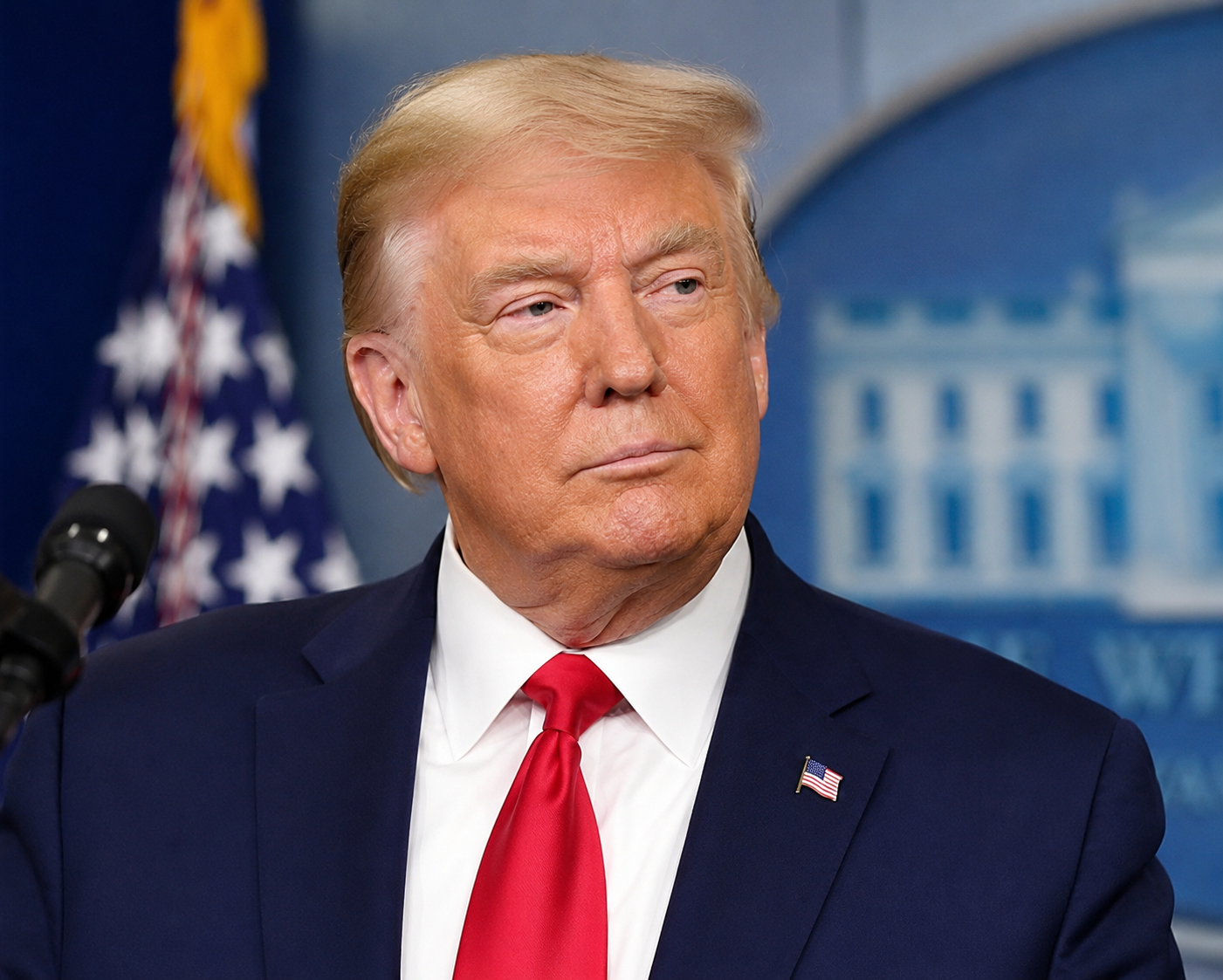
Claims About Donald Trump Hospitalization Remain Unverified Amid Online Speculation
Online Claims Have Drawn Attention
Online posts have circulated claiming that President Donald Trump was hospitalized, prompting questions about whether a significant medical event had taken place.
However, the information has not been confirmed by an official source or established as fact in the reports referenced here. Without credible confirmation, the hospitalization claim should not be presented as a verified medical development.
The situation highlights the importance of separating online speculation from confirmed information, particularly when the subject involves the health of a prominent public figure.
Posts about a possible hospitalization can spread rapidly, especially when they are accompanied by photographs, short video clips, or dramatic headlines. Their widespread circulation does not by itself establish that the underlying claim is accurate.
Interest in Trump’s Health Has Increased
Public attention surrounding Trump’s physical condition has increased following recent photographs, appearances, and online discussion about his health.
Those discussions have contributed to heightened interest in any new claim involving his medical condition. In that environment, even an unconfirmed statement can quickly attract attention and be repeated across multiple platforms.
That does not mean the information has been independently established. Repetition can make an online claim appear more certain than it actually is, particularly when readers encounter the same statement in several different posts.
For that reason, speculation surrounding Trump’s health should remain clearly separated from information that has been officially confirmed.
Social Media Speculation Is Not Medical Confirmation
Social media allows information to move quickly, but speed does not guarantee accuracy.
A post can make a strong claim about a hospitalization, medical emergency, or diagnosis without providing evidence that the event actually occurred. When that happens, readers may see a dramatic statement long before any reliable confirmation becomes available.
Claims involving Trump should therefore be evaluated based on the information supporting them rather than the number of times they have been shared.
If a post does not provide credible confirmation of a hospitalization, it should not be treated as proof that a hospitalization occurred.
The same standard applies to claims about specific illnesses, medical emergencies, treatments, or diagnoses. Without reliable supporting information, those details remain unverified.
Photographs Cannot Establish a Diagnosis
Photographs and short video clips often become a major part of online discussion about the health of public figures.
An image may prompt questions about someone’s appearance, movement, or physical condition, but it cannot reliably establish a medical diagnosis.
Images can also circulate without their full context. Viewers may not know when a photograph was taken, what happened immediately before or after it, or whether the image accurately reflects the broader situation.
Drawing medical conclusions from a photograph alone can therefore turn uncertainty into speculation.
A person’s appearance in a single image does not confirm that the person was hospitalized, experienced an emergency, or received a particular diagnosis.
For the same reason, short clips should not automatically be interpreted as evidence of a specific health problem. They may generate questions, but questions are different from confirmed medical information.
Dramatic Headlines Require Careful Reading
Readers should be especially cautious when encountering headlines that present an alleged medical event as certain while offering little information to support the claim.
A headline stating that Trump was hospitalized can create a strong impression before the reader has examined whether any confirmation is actually provided.
Similar caution is appropriate when a headline claims that he suffered a medical emergency or received a specific diagnosis.
The presence of confident wording does not make a claim verified. The important question is whether reliable reporting or an official statement supports what is being presented.
If that supporting confirmation is absent, the claim remains uncertain regardless of how strongly the headline is written.
Health Claims Can Spread Faster Than Verification
Medical information involving public figures can attract immediate attention because readers naturally want to know whether something significant has happened.
That interest can create an environment in which incomplete information spreads before its accuracy has been established.
A photograph may lead to speculation. That speculation can then become a social media post, which may be repeated by other accounts using increasingly dramatic language.
As the claim spreads, the original uncertainty can become less visible even though no new evidence has appeared.
This is why readers should distinguish between a claim becoming popular and a claim becoming confirmed.
Popularity measures how widely something is being discussed. Confirmation requires credible information establishing that the event actually occurred.
Hospitalization Would Be a Significant Development
A confirmed hospitalization involving the president would represent a significant medical development and would naturally receive considerable public attention.
Information of that importance would typically be accompanied by reporting from established news organizations or information from authorized representatives.
The absence of that kind of confirmation is an important reason to avoid treating circulating claims as established fact.
Until credible information becomes available, there is a meaningful difference between saying that people online are claiming Trump was hospitalized and stating that he was hospitalized.
The first describes the existence of an online claim. The second presents the medical event itself as factual.
At this stage, the information provided here supports only the existence of circulating claims, not confirmation that the hospitalization occurred.
No Specific Medical Condition Should Be Assumed
Unverified hospitalization rumors can sometimes expand into additional claims about what may have caused the alleged hospital visit.
Those additional claims should be treated with the same caution.
Without reliable confirmation, there is no basis in the information presented here for asserting that Trump suffered a particular medical emergency or was diagnosed with a specific condition.
Speculating about a diagnosis based on appearance, photographs, videos, or online commentary can create an inaccurate impression that medical facts are already known.
They are not established by the information provided here.
The responsible distinction is therefore straightforward: public discussion about Trump’s physical condition exists, but that discussion does not establish a hospitalization or diagnosis.
Unverified Does Not Mean Confirmed
The term unverified is important in situations like this because it accurately reflects what is known and what remains uncertain.
Describing a claim as unverified does not make an additional medical assertion. It simply means that sufficient confirmation has not been presented to establish the claim as fact.
That distinction allows readers to understand that they may encounter posts making a particular statement while also recognizing that the statement has not been reliably confirmed.
In this case, online material claiming that Trump was hospitalized should remain in that category unless credible confirmation emerges.
Readers should not interpret repeated posts, photographs, or speculation as substitutes for verified information.
Context Matters When Viewing Online Images
Images involving public figures frequently become the starting point for broader narratives about their health.
A photograph can be examined, reposted, enlarged, cropped, or paired with commentary that encourages viewers to interpret it in a particular way.
Yet none of those actions provide medical confirmation.
Without full context, viewers may reach conclusions that go beyond what the image actually demonstrates.
The same problem can occur with short videos. A brief moment may be presented as evidence of a larger medical issue even though the clip itself cannot establish what happened medically.
For this reason, photographs and videos are not reliable substitutes for confirmed information about hospitalization or diagnosis.
Readers Should Separate Questions From Facts
It is reasonable for public appearances or images to generate questions, particularly when a prominent political figure is involved.
However, asking whether someone is experiencing a health issue is not the same as confirming that a health event has occurred.
This distinction becomes especially important when online discussions begin turning questions into declarative claims.
A post may begin by asking about Trump’s health and later be repeated by another account as though a hospitalization has already been confirmed.
That progression can create confusion for readers who encounter only the later version of the claim.
Maintaining clear language about what is known helps prevent speculation from being mistaken for established information.
Credible Confirmation Remains the Key Standard
The central issue is not whether a claim is receiving attention but whether it has been supported by reliable information.
At the time reflected in this article, the claim that Trump was hospitalized has not been established as fact by the information referenced here.
Likewise, there is no basis here for presenting an alleged medical emergency or specific diagnosis as confirmed.
If reliable reporting or an official statement later provides confirmation, the factual status of the situation could change.
Until that happens, the appropriate description remains that the hospitalization claim is unverified.
What Can Be Said With Confidence
What is clear is that online posts making claims about Trump’s hospitalization have circulated and attracted attention.
It is also clear that public interest in his health has increased following photographs, appearances, and discussion about his physical condition.
Those facts explain why hospitalization rumors can gain significant attention quickly.
They do not, however, provide confirmation that Trump was admitted to a hospital or experienced a specific medical emergency.
Readers should therefore avoid treating speculation, photographs, short clips, or unsupported headlines as definitive medical evidence.
The Hospitalization Claim Remains Unverified
For now, claims that President Donald Trump was hospitalized should be regarded as unverified rather than established fact.
No diagnosis or conclusion about his current medical condition can be made from the information presented here.
The distinction is important because health-related rumors involving prominent figures can travel widely before reliable confirmation becomes available.
Until an official source, authorized representative, or established reporting provides credible confirmation of a hospitalization, readers should approach such claims cautiously.
Photographs and videos may generate discussion, but they cannot independently establish a diagnosis or confirm that a hospital visit occurred.
The most accurate conclusion based on the information available here is therefore limited: online claims about Trump being hospitalized are circulating, but those claims have not been confirmed…
PART 3: THE RUMOR THAT OUTRAN THE TRUTH
By evening, the claim had traveled far beyond the account that first posted it.
It appeared in private messages, community groups, political discussions, and videos assembled from unrelated photographs.
Some versions said Donald Trump had been taken to a hospital.
Others claimed that an emergency had occurred during the night.
A few posts went even further, naming supposed medical conditions without providing a doctor, document, official statement, or credible report.
Yet beneath the dramatic headlines, the central problem remained unchanged.
No reliable confirmation had established that the alleged hospitalization happened.
The rumor was growing.
The evidence was not.
That difference became harder to recognize each time the story was reposted.
One account copied the headline but removed the word “reportedly.”
Another replaced “unconfirmed” with “breaking.”
A third added an old photograph of a motorcade and suggested that it showed an emergency journey.
Within hours, many readers were no longer asking whether the claim was true.
They were asking what had caused the hospitalization.
The question itself quietly assumed an event that had never been confirmed.
That was how uncertainty began disguising itself as fact.
It did not happen through one convincing piece of evidence.
It happened through repetition.
THE FIRST POST
The earliest version that attracted widespread attention was surprisingly vague.
It did not identify a hospital.
It did not name a physician.
It did not provide a statement from Trump, his family, his representatives, or the White House.
Instead, it relied on urgent wording.
“Something major is happening,” the post declared.
“People deserve to know the truth.”
Thousands of reactions appeared beneath it.
Some commenters demanded answers.
Others expressed concern.
Many repeated details they had encountered elsewhere, although those details could not be traced to an identifiable source.
A user named Rebecca paused before sharing it.
She had seen political rumors before.
Most disappeared within a day.
This one felt different because so many people were already discussing it.
Her brother Daniel sent her a message.
“Have you seen what happened?” he asked.
“What happened?” Rebecca replied.
“Trump was hospitalized.”
“Who confirmed it?”
Daniel did not answer immediately.
A minute later, he sent three links.
Rebecca opened the first.
It cited an unnamed social media account.
She opened the second.
It referred to “reports circulating online.”
The third embedded a video that cited the first two pages.
None contained independent confirmation.
“These are all repeating each other,” Rebecca wrote.
“But there are three of them,” Daniel replied.
“Three repetitions aren’t three sources.”
Daniel stared at her message.
He had never thought about the distinction.
The pages looked different.
Their headlines used different words.
Their profile photographs and layouts were unrelated.
Yet when he followed the information backward, every version led to the same unsupported assertion.
The rumor had created the appearance of corroboration by moving in a circle.
A PHOTOGRAPH WITHOUT A DATE
Soon, another image entered the discussion.
It appeared to show several vehicles near a medical facility.
A caption suggested that the photograph had been taken only minutes earlier.
The post spread rapidly because it seemed to provide visual proof.
There was just one problem.
The image was not new.
A reverse-image search showed that it had circulated years earlier in connection with an unrelated event.
The building was real.
The vehicles were real.
The alleged connection to the current rumor was not.
Nevertheless, corrections traveled much more slowly than the original post.
The dramatic version offered fear, mystery, and immediacy.
The correction offered a date and an explanation.
One invited people to react.
The other asked them to pause.
On social media, the first invitation was often more powerful.
Rebecca sent the older version of the photograph to her brother.
“Look at the publication date,” she told him.
Daniel examined it twice.
“So the picture is old?”
“Yes.”
“But that doesn’t prove nothing happened today.”
“No,” Rebecca answered.
“It proves this picture cannot establish that something happened today.”
Her response was careful because careful language mattered.
Disproving one misleading image did not reveal everything about Trump’s health.
It only removed that image from the list of credible evidence.
That was less satisfying than a dramatic conclusion.
It was also more honest.
THE EMPTY SPACE WHERE CONFIRMATION SHOULD HAVE BEEN
As night approached, journalists began watching the rumor.
They searched for official statements.
They contacted relevant representatives.
They examined public schedules and available reporting.
They looked for the ordinary signs that would accompany a major presidential medical event.
The expected confirmation did not appear.
That absence did not prove that every aspect of the rumor was impossible.
It did mean that nobody had sufficient grounds to report the alleged hospitalization as established fact.
A television producer named Marcus received a message from a colleague.
“Everyone online is talking about it,” the colleague wrote.
“Should we run something?”
Marcus looked at the draft headline.
It read, “Trump Rushed to Hospital as Health Fears Grow.”
“Who says he was rushed?” Marcus asked.
“It’s all over social media.”
“That isn’t an answer.”
“We could say sources are reporting it.”
“Which sources?”
The colleague sent him two articles.
Marcus opened them.
Neither identified a firsthand witness.
Neither cited an official representative.
Neither explained how the information had been obtained.
Both referred vaguely to online speculation.
“We cannot turn speculation into confirmation by putting it on television,” Marcus said.
“What if another network gets there first?”
“Gets where first?”
“To the story.”
“A story without verified facts is not a destination.”
The colleague fell silent.
Marcus rewrote the proposed headline.
“Unverified Claims About Trump’s Health Circulate Online.”
It was less explosive.
It was also the only headline their evidence could support.
WHY PEOPLE BELIEVED IT
The rumor did not spread merely because people were careless.
It spread because it connected with emotions that already existed.
Some readers were worried.
Some were suspicious.
Some disliked Trump and interpreted the rumor through that dislike.
Others supported him and saw the claim as evidence that opponents were hiding or manipulating information.
Different emotions led people to share the same unsupported story.
Fear gave it urgency.
Partisanship gave it meaning.
Curiosity gave it reach.
Repetition gave it familiarity.
Once a claim became familiar, it could begin to feel true even when readers could not remember where they had encountered it.
Daniel experienced that sensation himself.
By the time Rebecca challenged him, he felt as though he had known about the hospitalization for hours.
In reality, he had seen the same allegation repeated by accounts drawing from one another.
The quantity of posts had created an illusion of certainty.
“How many times did you see it before you believed it?” Rebecca asked.
“I don’t know.”
“Did you believe the first post?”
“Not completely.”
“The second?”
“Maybe a little more.”
“What new evidence did the second one contain?”
Daniel looked back through his phone.
“None.”
“That’s the problem.”
He placed the phone on the table.
“So I believed it because it kept appearing?”
“You began recognizing it,” Rebecca said.
“Recognition can feel like confirmation when we aren’t careful.”
THE VIDEO THAT SEEMED CONVINCING
Shortly before midnight, a video began spreading.
It showed Trump walking at a public appearance.
The clip had been slowed down.
Red circles highlighted his hands.
Arrows pointed toward his legs.
Dramatic music played beneath a narrator’s voice.
“Doctors are deeply concerned,” the narrator announced.
No doctors were named.
No medical records were shown.
No explanation was provided for how the narrator supposedly knew what physicians believed.
The video moved from visible details to invisible conclusions.
A gesture became evidence of pain.
A pause became evidence of confusion.
A facial expression became evidence of a diagnosis.
Every interpretation was presented with confidence.
None could be medically established from the footage.
A physician named Dr. Elena Morris encountered the clip after several patients sent it to her.
One message asked, “Can you tell what condition he has?”
Dr. Morris responded carefully.
“No responsible physician can diagnose a person from this edited video.”
The sender replied, “But doesn’t his movement look unusual?”
“Something appearing unusual to a viewer is not a diagnosis.”
“What if the video is accurate?”
“Even an authentic video lacks the medical history, examination, testing, and context required for a diagnosis.”
Dr. Morris knew her answer would disappoint people.
They wanted certainty.
Medicine frequently required restraint.
A short clip could raise a question.
It could not answer every question it raised.
THE COST OF INVENTED DETAILS
As the rumor continued, individual users began filling the gaps.
One person claimed that a family member worked at a hospital.
Another said a friend had seen security vehicles.
A third published a supposed timeline of the alleged emergency.
None supplied evidence that readers could independently examine.
The invented details made the story feel complete.
They also made it more dangerous.
False medical information could cause unnecessary fear.
It could influence political discussion.
It could damage trust in legitimate reporting.
It could make future official statements harder for people to believe.
The consequences extended beyond one public figure.
Every unsupported claim trained readers to treat suspicion as proof.
Every misleading photograph weakened the distinction between documentation and decoration.
Every fabricated quotation made authentic statements more difficult to recognize.
Rebecca watched the comments multiply.
Some users were celebrating.
Others were praying.
Many were arguing.
All were responding emotionally to an event that remained unconfirmed.
“This is becoming cruel,” she told Daniel.
“Because it might be false?”
“Because people have stopped caring whether it’s false.”
A SECOND WAVE
The following morning brought no credible confirmation.
For a brief period, interest began to decline.
Then a large account reposted the story.
Its message contained no new evidence, but its enormous audience gave the rumor a second life.
“Major media refuses to cover the developing Trump hospitalization,” the account claimed.
The absence of credible reporting was transformed into alleged proof of a cover-up.
This created a trap.
If established outlets reported no confirmed hospitalization, believers could say the media was hiding it.
If outlets discussed the rumor in order to correct it, believers could say the story had finally been acknowledged.
The claim had become resistant to evidence.
Marcus recognized the pattern immediately.
“They’re using the lack of confirmation to strengthen the allegation,” he told his colleague.
“How do we answer that?”
“With transparency.”
“Meaning?”
“We explain what we checked, what we found, and what remains unknown.”
“Will that convince everyone?”
“No.”
“Then what is the point?”
“The point is to give careful readers something reliable.”
Marcus understood that journalism could not force people to accept evidence.
It could only make the evidentiary boundary visible.
THE DIFFERENCE BETWEEN PRIVACY AND A COVER-UP
Some commenters argued that medical privacy explained the absence of confirmation.
Public figures retained personal privacy rights, and not every health detail had to be disclosed.
That was true.
But privacy could not be used as proof that a particular rumor was accurate.
A lack of disclosure left a lack of information.
It did not validate whichever story attracted the most attention.
Rebecca tried to explain this beneath one viral post.
“It is possible that the public does not know every detail about a politician’s health,” she wrote.
“That does not mean this specific hospitalization claim is true.”
A stranger replied almost immediately.
“So you admit something could be hidden.”
Rebecca considered ignoring him.
Instead, she answered.
“I admit there are things I do not know.”
“That’s the same thing.”
“No,” she wrote.
“Not knowing is not evidence for the conclusion you prefer.”
The stranger never responded.
Others continued arguing beneath them.
THE BUSINESS OF URGENCY
Behind several rumor pages was a simple financial incentive.
Dramatic headlines generated clicks.
Clicks created advertising revenue.
Accuracy was less profitable when uncertainty could be packaged as revelation.
A headline saying “No Hospitalization Confirmed” offered little mystery.
A headline promising “The Truth They Don’t Want You to Know” encouraged readers to open the page.
Once inside, they often encountered paragraphs that repeated the allegation without supporting it.
The article might end by admitting that confirmation remained unavailable.
By then, the headline had already performed its purpose.
The reader had clicked.
The advertisement had loaded.
The rumor had gained another share.
Daniel opened one such article and scrolled slowly.
“The headline says doctors issued a warning,” he said.
“Does the article identify them?” Rebecca asked.
He searched the page.
“No.”
“Does it quote a medical statement?”
“No.”
“Does it confirm a hospital?”
“No.”
“What does it actually say?”
Daniel reached the final paragraph.
“It says social media users are concerned.”
“That means the article is using people’s reaction to the rumor as evidence for the rumor.”
He closed the page.
For the first time, he felt embarrassed rather than frightened.
WHEN CORRECTIONS ARRIVED
Fact-checking organizations eventually addressed some of the most widely shared photographs and claims.
They traced older images to their original contexts.
They noted the absence of official confirmation.
They explained that edited video clips could not establish a diagnosis.
The corrections were methodical.
They were also attacked by people who had already invested emotionally in the rumor.
Some accused the fact-checkers of political bias.
Others insisted that the corrections proved powerful institutions were becoming nervous.
A few quietly deleted their earlier posts.
Most left them online.
This created another problem.
Even after a claim had been challenged, its original form remained searchable and shareable.
A person encountering it days later might never see the correction.
Misinformation did not disappear when the moment passed.
It settled into the internet like sediment.
It waited to be rediscovered.
THE CALL
That afternoon, Daniel telephoned Rebecca.
“I shared it,” he admitted.
“I know.”
“How?”
“You sent it to the family group.”
“I forgot about that.”
Their aunt had already forwarded the claim to several friends.
One of those friends posted it publicly.
Daniel suddenly saw the rumor as a chain of individual decisions rather than an unstoppable force.
Each person believed sharing was a small act.
Together, those acts had given the claim enormous reach.
“Should I delete it?” he asked.
“Correct it first.”
“Why not just delete it?”
“Because the people who saw your claim may never know you discovered it was unverified.”
Daniel returned to the family group.
He typed a message, erased it, and tried again.
“The hospitalization story I shared has not been confirmed,” he finally wrote.
“The links I sent were repeating the same unsupported claim, and one photograph attached to the story was old.”
Their aunt responded with a question.
“So nothing happened?”
Daniel looked at Rebecca’s earlier messages before answering.
“I don’t know everything about his health.”
“What I know is that the post I shared did not prove he had been hospitalized.”
It was not a dramatic correction.
It did not pretend to settle questions beyond the evidence.
It was accurate.
THE DEEPER STORY
By the third day, the original rumor had begun losing momentum.
No dramatic revelation arrived.
No credible evidence emerged to support the most sensational versions.
The pages that had promoted the claim moved on to newer controversies.
But Rebecca could not stop thinking about how easily the story had spread.
The most important question was no longer whether one unsupported rumor survived.
It was what the rumor revealed about the people who had carried it.
Everyone wanted to believe they could recognize deception.
Few people imagined that misinformation might arrive through a friend.
It did not always look absurd.
Sometimes it appeared beneath a professional logo.
Sometimes it borrowed a real photograph.
Sometimes it included accurate background information before introducing an unsupported conclusion.
Sometimes it simply told readers what they were already prepared to believe.
That was why verification required effort.
Truth did not announce itself through typography.
A false claim could be beautifully designed.
A factual correction could appear in an ordinary paragraph.
THE EDITOR’S DECISION
Marcus gathered his newsroom team before their evening broadcast.
“We are not leading with the rumor,” he said.
A younger producer raised her hand.
“Are we ignoring a story people are discussing?”
“No.”
“Then how do we cover it?”
“We cover the information environment.”
He turned toward the screen behind him.
It displayed three columns.
The first was labeled “Confirmed.”
The second was labeled “Claimed.”
The third was labeled “Unknown.”
Under “Confirmed,” the team listed the existence of widespread online posts.
They listed the reuse of at least one older photograph.
They listed the absence of credible confirmation in the material they had reviewed.
Under “Claimed,” they placed the alleged hospitalization and the unsupported medical explanations.
Under “Unknown,” they placed any private medical information that had not been publicly established.
“This is the story,” Marcus said.
“Not the diagnosis people are inventing.”
“Not the emergency they are assuming.”
“The story is the gap between what is being claimed and what can actually be demonstrated.”
The broadcast aired that evening.
It did not attract the enormous audience generated by the most dramatic rumor pages.
But it gave viewers a clear record of what was known.
Sometimes responsible reporting was not the loudest voice.
It was the voice that refused to shout beyond its evidence.
A LESSON IN THREE QUESTIONS
Rebecca later developed a simple habit whenever she encountered a breaking claim.
She asked three questions.
Who is making the claim?
What evidence do they provide?
Can that evidence be independently confirmed?
If the first answer was vague, she slowed down.
If the second answer was merely another social media post, she slowed down again.
If the third answer was no, she did not share the story as fact.
The method was not perfect.
It did not solve every uncertainty.
It did, however, place a barrier between emotional reaction and public distribution.
Daniel adopted the same habit.
Weeks later, he received another alarming headline.
His thumb moved toward the share button.
Then he stopped.
He opened the article.
He searched for the original source.
He checked the date of the photograph.
He discovered that the story had been misrepresented.
This time, the chain ended with him.
THE POWER OF SAYING “I DON’T KNOW”
Online conversation often rewarded confidence.
People who spoke with certainty attracted attention.
Those who acknowledged limits could appear weak or uninformed.
Yet in the middle of the Trump hospitalization rumor, the most responsible sentence was also the simplest.
“I don’t know.”
It did not mean that truth was impossible.
It meant that the available information did not justify a conclusion.
“I don’t know” protected the space where verified facts could eventually appear.
It prevented imagination from occupying that space first.
Dr. Morris used the sentence when asked for a diagnosis.
Marcus used it when asked what might have happened privately.
Rebecca used it when her relatives demanded a definitive answer.
Each time, the sentence resisted pressure to transform uncertainty into spectacle.
THE RUMOR’S FINAL TRANSFORMATION
Months later, fragments of the claim resurfaced in a compilation video.
The narrator described the hospitalization as though it had been established.
Old speculative posts appeared on the screen as supposed evidence.
The absence of an original source was hidden beneath layers of repetition.
Daniel recognized one of the screenshots.
It was the post he had once shared.
His name had been cropped away, but the wording was unmistakable.
He felt a cold heaviness in his chest.
A careless decision he made in seconds had become part of someone else’s manufactured history.
He called Rebecca.
“It’s back,” he said.
“What is?”
“The hospital story.”
She watched the video he sent.
“This is why corrections matter,” she told him.
“My post is in it.”
“Then publish your correction again.”
“Will it make a difference?”
“It may make a difference to the next person who goes looking.”
Daniel wrote a public explanation.
He described how he had encountered the claim.
He explained that the sources were circular.
He identified the old photograph.
He acknowledged that he had shared the story before verifying it.
The post did not make him look clever.
It made him accountable.
Unexpectedly, hundreds of people responded.
Many admitted they had made similar mistakes.
Some thanked him for explaining how the rumor had moved.
One comment stayed with him.
“I saw your original message months ago,” a woman wrote.
“I believed it because it came from someone who appeared certain.”
“Thank you for coming back to correct it.”
WHAT THE PUBLIC DESERVES
Public interest in a president’s health is legitimate.
Leadership carries responsibilities that can make verified medical information important.
But legitimate interest does not justify invented facts.
The public deserves accurate reporting.
It deserves clarity about what is confirmed.
It deserves honesty about what remains unknown.
It does not benefit from unsupported diagnoses, recycled photographs, anonymous whispers, or headlines designed to exploit fear.
Careful reporting may feel incomplete when facts are limited.
That incompleteness is not a failure.
It is an honest reflection of the available evidence.
THE QUIET ENDING
There was no cinematic conclusion to the rumor.
No anonymous source emerged with undeniable documents.
No dramatic broadcast resolved every question.
The claim simply weakened as attention moved elsewhere.
That quiet ending revealed something important.
Rumors often promise a final revelation that never comes.
They survive by keeping readers in suspense.
They suggest that confirmation is always moments away.
When it fails to arrive, the pages promoting the story rarely apologize.
They publish another headline.
The audience carries the uncertainty forward.
Rebecca kept a screenshot of Daniel’s correction.
Not to shame him.
To remember that misinformation was not only created by distant organizations.
It was sustained by ordinary people acting before they knew.
Daniel kept it too.
Whenever a breaking story stirred anger or fear, he read his own words.
“The post I shared did not prove what it claimed.”
That sentence became a personal warning.
THE FINAL TRUTH
The strongest conclusion was not the most exciting one.
Online claims alleging that Donald Trump had been hospitalized circulated widely.
The material examined did not provide credible confirmation that such a hospitalization occurred.
Photographs and edited clips could not establish a diagnosis.
Repeated posts could not replace independent evidence.
Anonymous assertions could not become factual merely because thousands of people reacted to them.
The responsible position remained grounded in what could actually be supported.
Questions about a public figure’s health might continue.
New information might emerge.
If credible evidence appeared, responsible reporting could evaluate it.
Until then, the boundary between suspicion and fact had to remain visible.
The rumor had traveled farther than the truth because it required less effort.
The truth asked people to stop.
It asked them to examine.
It asked them to accept uncertainty.
That request was quieter than a sensational headline.
But it was also more powerful.
Because every person who paused before sharing became a barrier.
Every journalist who demanded a source became a barrier.
Every physician who refused to diagnose from a video became a barrier.
Every reader who corrected a mistake became a barrier.
And sometimes the defense of truth did not begin with discovering a hidden answer.
Sometimes it began with the courage to say that the answer had not yet been established.
That was not silence.
That was responsibility.
And in an online world built to reward speed, responsibility was its own form of resistance.